Key takeaways
- One pair of dumbbells covers pressing, rowing, squats, hinges and carries — a complete home session.
- Choose a weight you can lift with clean form for the hardest move; reps and tempo do the rest.
- Tell the [quiz](/quiz) you have dumbbells and it writes the session around them.
Why one pair, and not a rack
Dumbbell marketing wants you to believe in a progression of purchases: light pair, medium pair, heavy pair, then the adjustable set, then the stand for the set. A dumbbell workout at home asks for almost none of that. One pair — the pair you can press overhead with good form — unlocks every basic movement pattern, and the patterns are what training is made of. Everything else is refinement you can add later, or never.
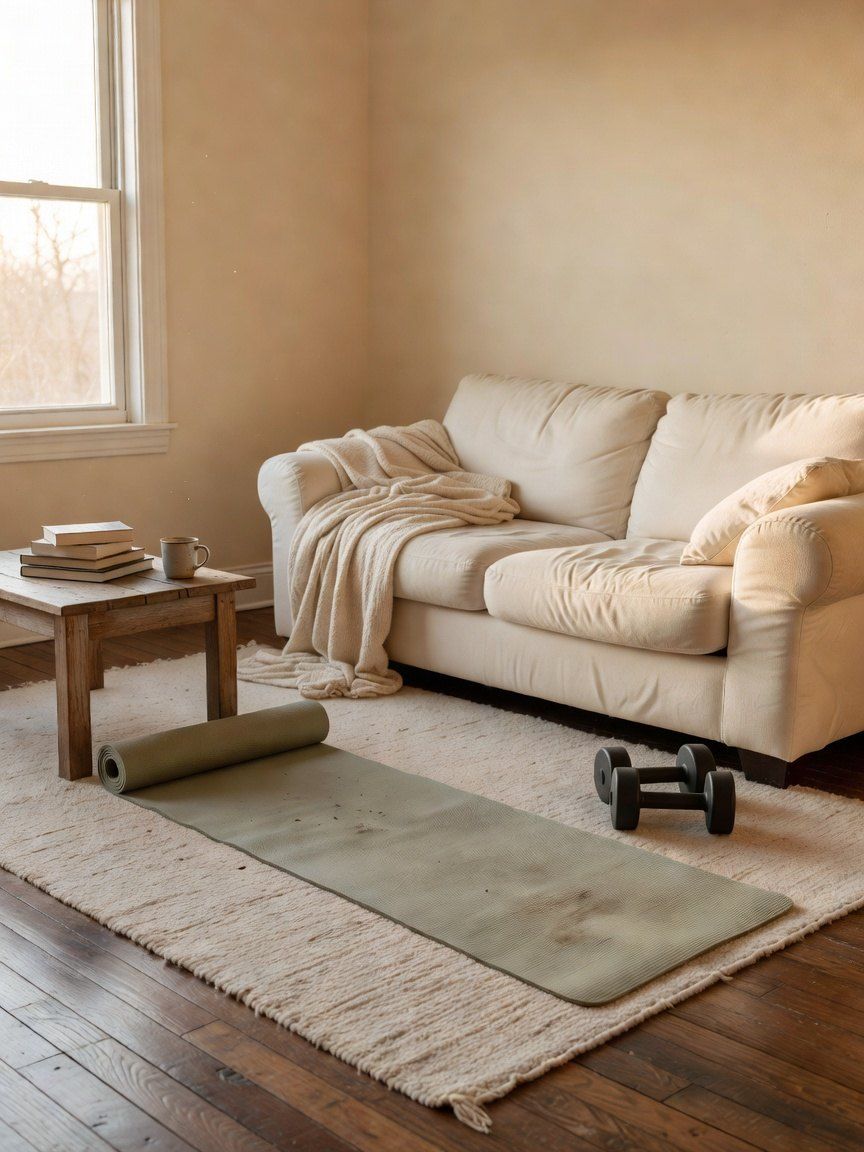
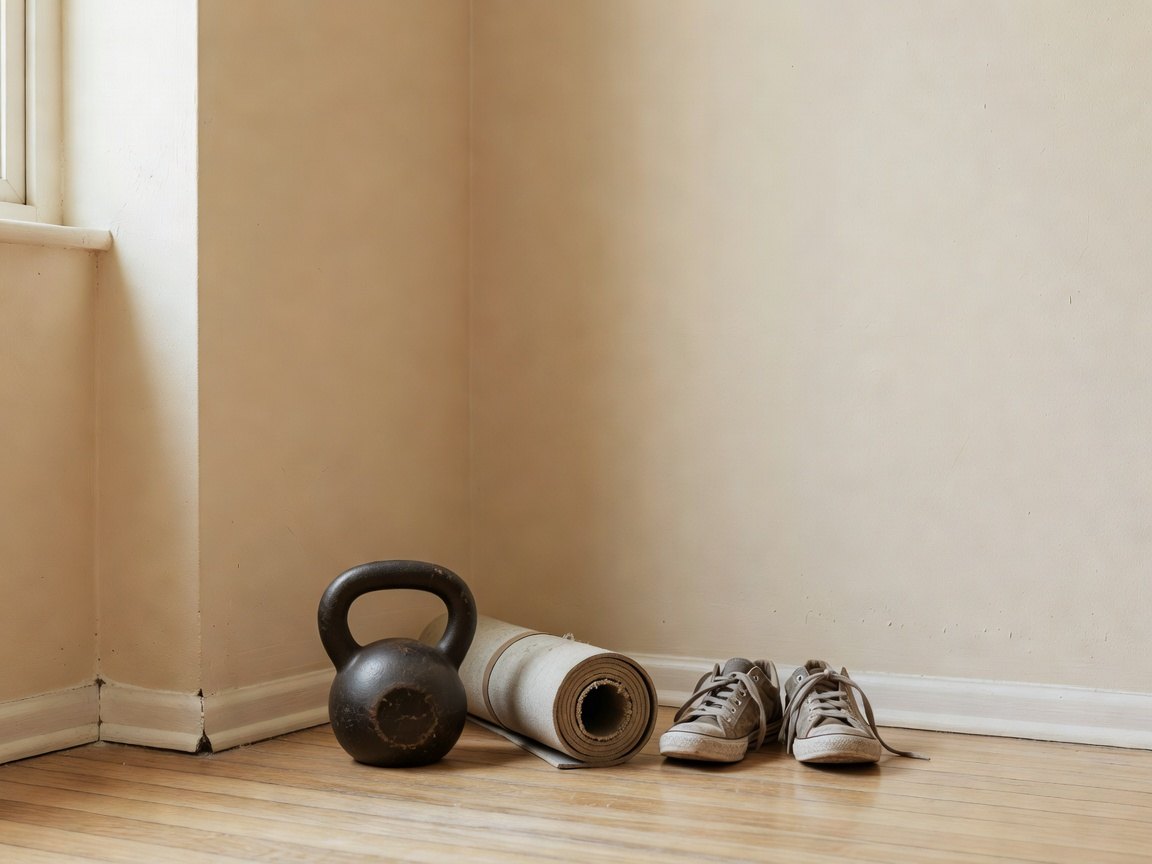
There is a practical reason to start small that has nothing to do with money: storage and setup. A single pair lives in a corner, under a sofa, beside the door. It is out in ten seconds and away in ten more. A home session lives or dies on that kind of friction, far more than on whether your squat load is perfectly calibrated.
And one pair does not mean one difficulty. The same dumbbells are heavy for an overhead press, medium for a row, and light for a squat — which is roughly the right relationship between those moves anyway. Your body is not evenly strong, and a single pair quietly respects that.
There is also a learning argument. Beginners improve fastest at the skill of lifting — bracing, balancing, moving smoothly — and skill practice wants the same tool in your hands every day, not a rotating cast of equipment. One pair means every session is more practice with the exact implements you own, and the movements groove in quickly. Fancy kit multiplies options; at the start, options are mostly a way to feel busy instead of trained. The pair in the corner, used daily, teaches more in a month than a garage of gear used occasionally.
The moves one pair unlocks
With two dumbbells and some floor, the session can cover the full set of patterns. A typical arrangement:
- Goblet squat — one dumbbell held at the chest, the most teachable loaded squat
- Floor press — pressing from the floor, no bench needed, kind to shoulders
- Bent-over row — the pulling pattern bodyweight alone struggles to cover
- Romanian deadlift — a slow hinge that loads the back of the legs
- Overhead press — one or both dumbbells, standing, full-body tension
- Farmer's carry — pick them up and walk; grip, posture and patience in one move
Choosing the weight honestly
Pick the pair by the overhead press, your weakest of the main moves. If you can press it for a set of controlled reps — no arching, no wobbling, no holding your breath and hoping — it is about right. That same pair will feel easy for carries and hinges at first. That is fine and temporary: slow the reps down, pause at the hard part, add reps before you add shopping. Tempo is free load.
If you already own a pair that feels light for everything, work the harder variations before buying heavier: split squats instead of squats, one-arm presses instead of two, rows with a long pause at the top. Most people get months of progress out of variations. When a pair truly is too light for every variation, that is the day to buy the next pair — a decision made from evidence in your training log, not from a product page.
In Setline, Pro keeps your last-time reps for each move in the player, which makes this judgment concrete. When last time says the reps climbed easily for three sessions straight, the move is telling you something.
Form is the other half of choosing honestly, and it is not a aesthetic preference — it is how a fixed weight keeps working. A row pulled with a still back and a full squeeze trains the back; the same row heaved with momentum trains the heave. When you cannot add load, you add control: slower lowering, a pause where the move is hardest, a longer set taken closer to the point where form would break — and then stop there, one clean rep in reserve. Those techniques are progressions in their own right, and they are the reason a light pair in disciplined hands outperforms a heavy pair used carelessly.
How the session runs, start to finish
Take the quiz and choose dumbbells as your gear, add a bench or a pull-up bar only if you genuinely own them. Pick a style — strength if you want the lifting to be the point, or a cut or active style if the dumbbells are supporting a broader goal — and set your minutes. The session it writes will mix the dumbbell moves with bodyweight work, because that mix is what a real home session looks like: nobody rows for twenty straight minutes.
Train it today, and train the same session tomorrow. Repetition matters even more with weights than without, because loaded moves are skills: the goblet squat you practice daily becomes smooth, and smooth is what lets you add reps safely. The thinking behind the repeat is laid out in train tonight, same tomorrow, and the bodyweight foundation it builds on is in a bodyweight cut you can finish at home.
Press "Done set" after each set, and let the session end when it ends. Afterwards, eat a normal meal — the plates beside your session in the catalog carry honest calories if you want company for dinner decisions.
What to skip buying (for now)
Skip the bench until floor pressing feels limiting — it may never. Skip the second and third pairs until variations stop working. Skip gloves, belts and stands entirely; a home session needs none of them. The one upgrade genuinely worth considering early is a kettlebell, because its shape makes swings and carries feel different from dumbbells — but "worth considering" still means after the habit exists, not before.
One pair, one corner, one repeated session. That is a complete dumbbell setup, and it fits in the space a houseplant would take.
Common questions
What weight dumbbells should a beginner start with?
Choose by the overhead press: a pair you can press for controlled reps with clean form. That weight will be challenging for pressing, moderate for rows, and light for legs — which is a sensible spread for one pair.
Can one pair of dumbbells really train the whole body?
Yes. Goblet squats, floor presses, rows, Romanian deadlifts, overhead presses and carries cover legs, pushing, pulling, hinge and grip. Bodyweight moves fill the gaps, which is how Setline sessions are built.
Do I need a bench for dumbbell workouts at home?
No. The floor press replaces the bench press, and rows, squats and hinges never needed one. Add a bench later only if you want it — and if you get one, it is one of the gear options in the quiz.