Key takeaways
- The hardest part of eating on training days is not nutrition — it is deciding, after the session, with an empty stomach.
- Three catalog plates — breakfast, lunch, dinner — with kcal printed, turn that decision into a glance.
- Fuel keeps Catalog, Logged and Session in one view, so food lives beside the training instead of in another app.
The second decision of every training day
Ask anyone what to eat on training days and you will get a lecture. Ask them what they actually ate after Tuesday's session and you will get a shorter, more honest answer: whatever was quick. The problem is rarely knowledge. It is timing. The food decision lands at the exact moment you are tired, hungry and finished with deciding things — right after the workout, which was itself a small stack of decisions.
Most people respond by opening a second system: a recipe app, a calorie tracker, a notes file of good intentions. Now training lives in one place and food lives in another, and the two never quite meet. Setline takes the opposite approach. Your meals are catalog plates that sit beside the session, on the same screen, with their kcal printed next to them. Deciding dinner becomes part of finishing the workout, not a second project after it.
It is worth noticing how much advice about training-day food assumes a person with time, a stocked kitchen and a plan made in advance. That person exists mostly in meal-prep photos. The rest of us decide at 7 p.m., with the session done and the fridge half full. A system built for that moment — three known plates, numbers printed, decision over in seconds — beats a perfect system built for a person who is not you.
Three plates, printed kcal, no separate app
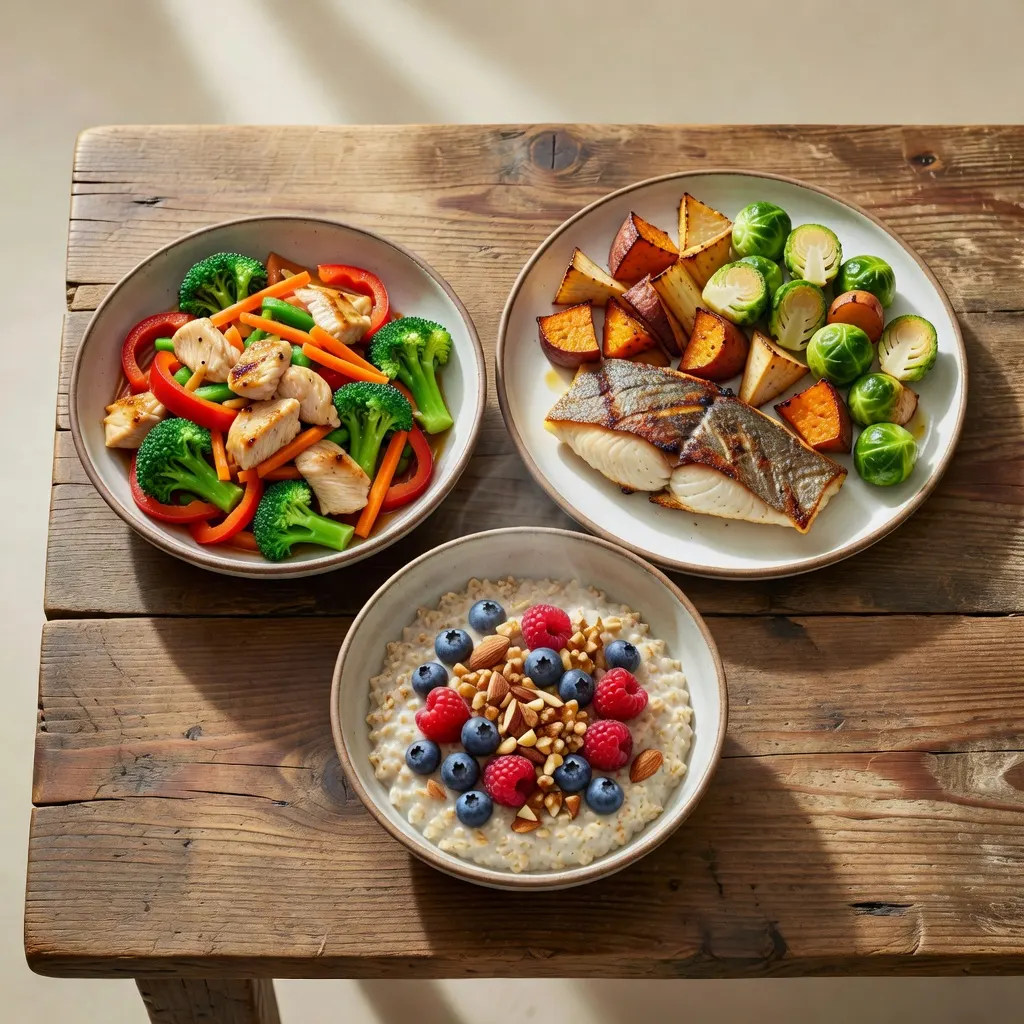
The catalog covers the day in the shape days actually have: breakfast, lunch and dinner. Each plate is a real meal with an honest calorie count — not a target, not a score, just the number, printed the way a price is printed. When someone asks what to eat on training days, the Setline answer is deliberately undramatic: one of the plates. Pick by appetite, by what is in the fridge, by which one you did not have yesterday.
Because the plates are a catalog rather than a feed, there is nothing to scroll and nothing to optimize. You will see the same plates again, and that is a feature: familiar meals are fast decisions. The variety problem that makes people abandon meal plans — every day a new recipe to shop for and learn — never gets started. Browse the catalog and you will see how short the list is meant to be.
The ordinariness is the design. None of the plates requires a recipe video, a specialty store or a free Sunday afternoon. They are meals that can be cooked on a Wednesday by a tired person — which is, of course, exactly who is doing the cooking on training days.

What the three plates look like
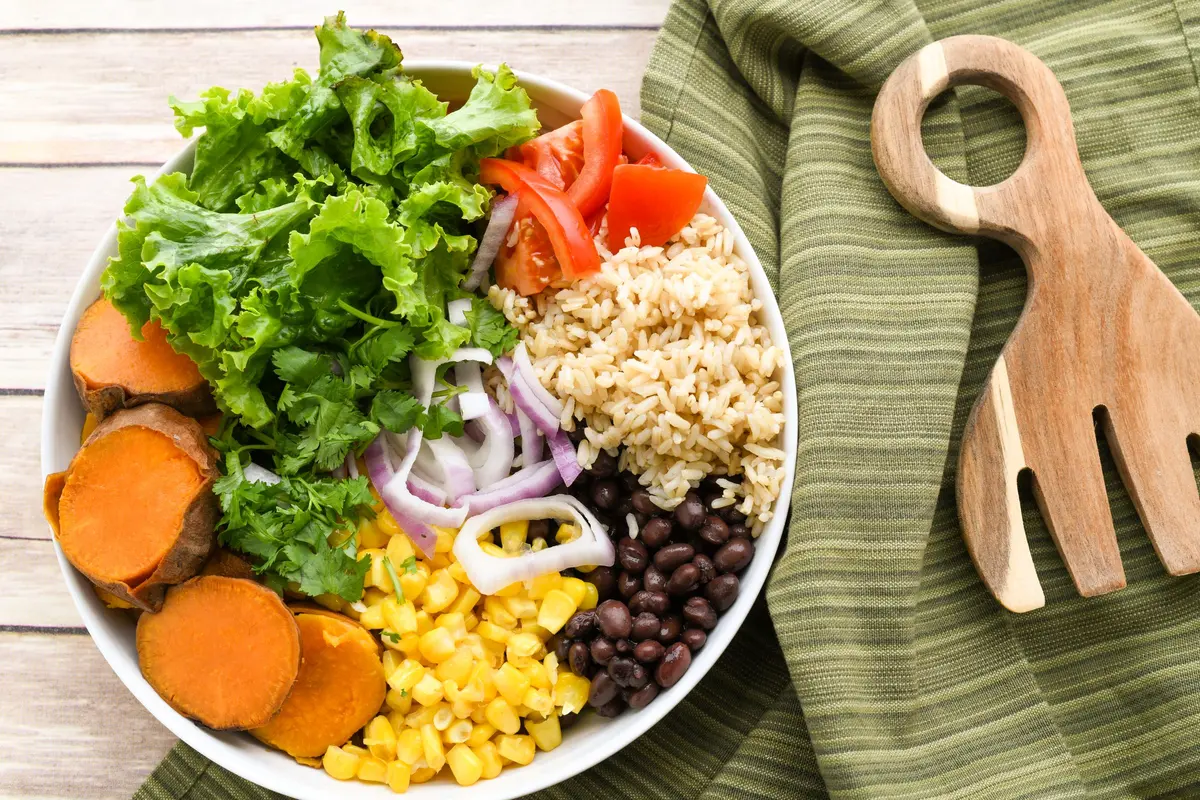
A typical training day in the catalog is ordinary food, portioned and printed:
- Breakfast — a yogurt bowl with berries: quick, cold, no cooking before the day starts
- Lunch — a chicken bowl with lemon and grains: the plate that carries a workday afternoon
- Dinner — a white fish plate with greens and avocado: light enough for after an evening session
- Every plate prints its kcal beside its name, before you choose it — not after you log it
- With Pro, any plate can be swapped for another in the same slot when the day disagrees
- With Pro, the week's chosen plates roll up into one grocery list — shopping becomes one trip

Catalog, Logged, Session: one view called Fuel
Fuel is the food side of Setline, and it has exactly three views. Catalog is the plates. Logged is what you actually ate — when you finish a plate, you mark it, and if you ate something else instead, you mark that and Fuel does its best to match it to the catalog without inventing calories. Session is the plates sitting next to today's training, which is where most people spend their time.
The point of keeping the three together is that eating stops being homework. There is no exporting, no syncing, no barcode scanning ritual. The same habit that runs your training — open the app, see today, tap Done set — runs your food: open Fuel, see the plates, mark what you ate. And because the session and the plates share a screen, what you eat on training days answers itself in the context of the work you just did.
Rest days are not a different menu
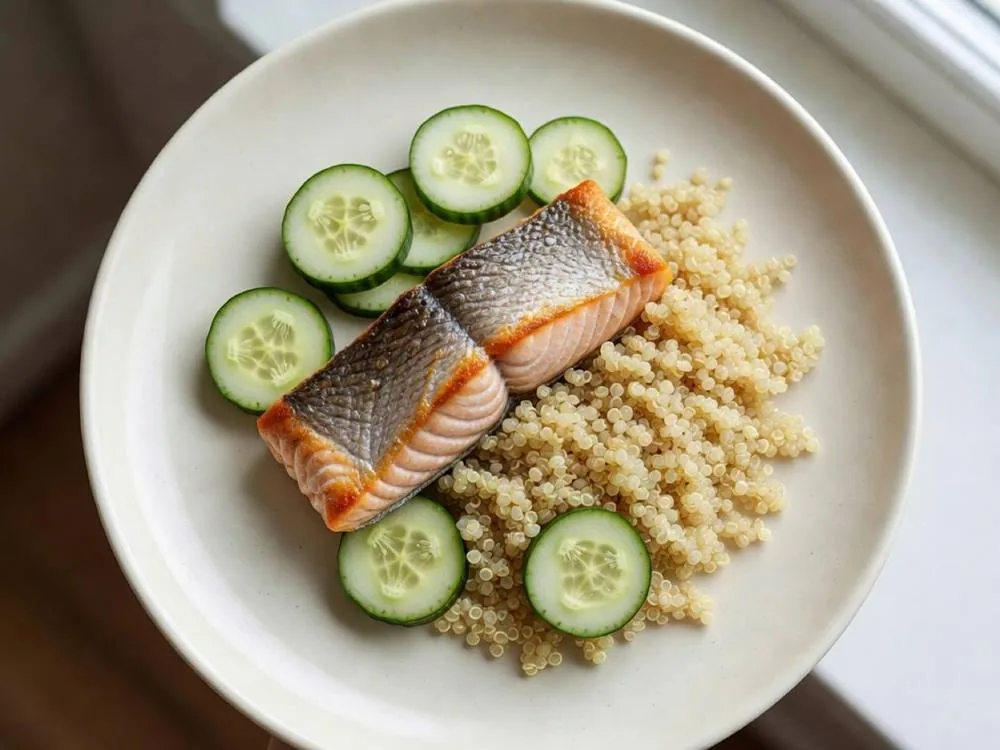
A common complication is the belief that rest days need their own rules: fewer carbs, a smaller dinner, a penalty for not training. Setline does not do any of that. The same three plates appear on rest days, because the catalog is not a reward system. If you are hungrier, pick the heavier plate; if you are not, pick the lighter one. The kcal are printed either way, and the decision stays a glance instead of a calculation.
Keeping one menu for every day is what makes the arrangement survive real weeks. Training days and rest days blur together in actual life — sessions move, days swap. A food system that depends on knowing which kind of day it is will eventually guess wrong. One that simply shows you three honest plates and lets you choose is very hard to break. If you want the training side of that simplicity, the quiz is where it starts.
Common questions
Do I need protein shakes or supplements on training days?
No. Setline does not sell supplements and the catalog is ordinary food — yogurt, chicken, fish, grains, greens. The plates are built to be normal meals a person might cook anyway, with the kcal printed. If you like a shake, nothing forbids it; it is just not part of the system, and your training days will work fine without one.
What if I eat out, or eat something that is not a catalog plate?
You mark it in Logged as something else, and Fuel matches it to the closest catalog plate where it honestly can. Where it cannot, it leaves the record plain rather than inventing a precise-looking calorie number. The point of the log is a truthful history of your days, not a perfect database — a rough, honest record beats a precise fiction.
Are the calories on the plates exact?
They are honest estimates, printed before you choose, and consistent across the catalog — which is what makes them useful for comparing plates against each other. Real cooking varies: your yogurt is not laboratory yogurt. Treat the numbers as reliable guides for choosing, not as measurements of your body. Setline sets no calorie targets; the number is information, not an assignment.