Key takeaways
- Breakfast first: three real catalog plates — veg scramble 180 kcal in about 10 minutes, egg rice skillet 484 kcal, high-protein oats 639 kcal — picked by time, appetite and session size.
- Match the plate to the gap until your next meal: a light plate when lunch follows soon, a heavier plate when the next meal is far away.
- Leave a gap between eating and training, heavier plate means earlier breakfast; after the session, return to normal food, for example the lemon chicken bowl at 377 kcal.
Start with breakfast, not the whole day
Most training days are not ruined by a bad workout. They are ruined by a skipped breakfast, followed by a hungry afternoon and a dinner that has to do too much. If you want a simple answer to what to eat on training days, start with the first meal, not the whole day. Get breakfast right and the rest of the day gets easier, because you are no longer trying to catch up on food while you train.
This article is about breakfast only, on purpose. Setline already has a whole-day companion piece covering breakfast, lunch and dinner plates beside a session. Think of this one as the breakfast chapter: three real catalog plates, their printed kcal, and how to pick between them on a training morning. Browse the food catalog and you will see the same plates with their numbers printed beside their names, before you choose.
Why breakfast sets up a training day
A morning session asks a plain question: did you eat enough to do the work, without eating so much that the work feels heavy? Breakfast is where that question gets answered. Skip it and you may start the session already hungry. Eat a huge meal right before you train and you may spend the session waiting for it to settle. The middle path is ordinary food, eaten with enough time to spare, in a portion that matches the day.
It also helps to decide breakfast the night before. A training morning already holds enough decisions: what to wear, when to leave, which session to run. If breakfast is also undecided, it becomes the easiest thing to skip. Pick one plate tonight, and tomorrow morning is just cooking and eating, not deciding.
What to eat on training days: breakfast before a morning session
Start with the quick plate. The veg scramble is 180 kcal and ready in about 10 minutes, which makes it the honest choice for an early session when time is short. It is eggs with vegetables, served as a light plate, and it suits a day when the session is short or when you plan a proper lunch afterwards. Its job is to take the edge off hunger without sitting heavily.

A heavier plate for a bigger morning
When the morning is longer and the session is bigger, pick something with more staying power. The egg rice skillet is 484 kcal: rice and egg in a pan, served hot, the kind of plate that still feels present two hours later. Cook it when you have time to sit down, not when you are already late. A heavier breakfast earns its place on days when training is the main event of the morning, not a quick add-on before work.

Two ends of a useful range
Neither plate is a rule. They are two ends of a useful range: light and quick at one end, hot and filling at the other. Your appetite, session length and schedule pick between them. If unsure, take the lighter plate and eat lunch on time.
Light days and heavier days
Not every training day deserves the same breakfast. A short bodyweight session and a long barbell morning are different days, even if both count as training. The catalog prints kcal beside each plate, so you can compare without guessing.
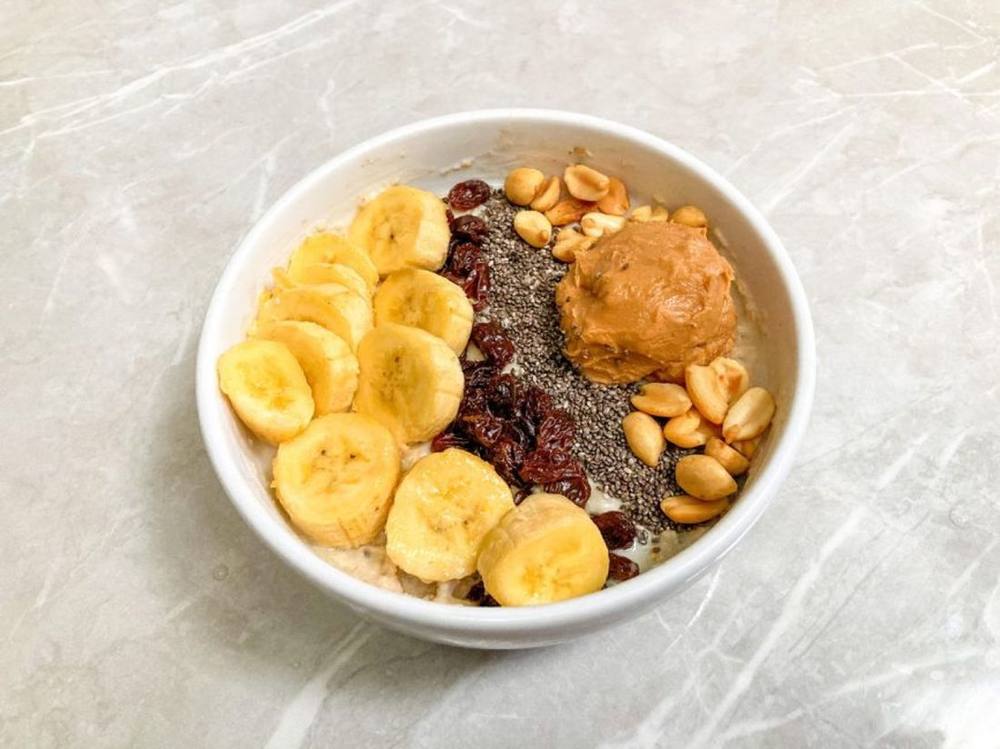
The high-protein oats sit at 639 kcal, the heaviest breakfast in this article, and the bowl shows why: oats topped with banana, raisins, chia, peanuts and peanut butter. It fits a day when you will train hard and eat lunch late, or a day when breakfast has to carry you until the afternoon. On a lighter day it may simply be too much, and that is useful information too.
Match the plate to the gap
Match the plate to the gap, not to the workout alone. If lunch follows within a few hours, a light plate is enough. If the next meal is far away, pick the heavier plate. Hunger at noon says yesterday's choice was too light; a heavy, sluggish session says it was too much. Adjust by one plate next time.
Timing: eat, train, then eat again
Timing is mostly about leaving a gap. Eat breakfast, give it time to settle, then train. A light plate like the veg scramble needs a shorter gap than a heavy bowl of oats, so plan backwards from the session start: the heavier the plate, the earlier you eat it. If you train very early and cannot face food first, eat something small, train, then eat a proper breakfast right after.
After the session, the day returns to normal food. Lunch can be an ordinary catalog plate, for example the lemon chicken bowl at 377 kcal and about 30 minutes, which carries a workday afternoon. For the finer points of eating around a session, the article on what to eat before and after a workout covers timing in more detail, and the three plates beside the session piece shows how breakfast, lunch and dinner sit together across a whole training day. This article stays with breakfast because that is the meal most often skipped, and the one that sets the tone for the rest.
Try it as a planned session
You do not have to hold the plates, the kcal and the timing in your head. Take the quiz and Setline will arrange a session that fits your gear, your style and your minutes, with the food catalog sitting beside it. The free player stays free. Pro adds the extras, with a 14-day free trial after you subscribe, at $6.99 a month, $39.99 a year, or $79.99 once for Lifetime. See the full breakdown on the pricing page before you decide.
Common questions
Should I eat before a morning session, or train fasted?
Either can work, and the catalog does not force one. If you feel steady and strong without food, a small plate after the session is fine. If you feel shaky or distracted, eat first. The test is your session, not a rule: if breakfast makes the work feel better, keep it.
What if I have only ten minutes?
Take the veg scramble. At about 10 minutes and 180 kcal, it is built for exactly that morning. A small, real plate beats a skipped breakfast, and it leaves room for a proper lunch.
Is a heavier breakfast better on hard training days?
Often yes, but heavier means matched to the day, not as heavy as possible. The oats at 639 kcal suit a long morning with a late lunch. On a short session day, the same bowl may feel like too much. Let the gap until your next meal guide the choice.
Do I need a different breakfast on rest days?
No. Rest days use the same plates. If you are less hungry, pick the lighter plate. If you are just as hungry, pick the same one you would on a training day. Setline prints the kcal either way, so the choice stays a glance rather than a calculation.