Key takeaways
- Six bodyweight moves in about twenty minutes: cat stretch 3 sets of 30 seconds, child's pose 3 sets of 30 seconds, figure-four stretch 3 sets of 20 seconds each side, 90/90 hip switch 2 sets of 8 each side, couch stretch 2 sets of 40 seconds each side, world's greatest stretch 3 sets of 20 seconds each side — no equipment, just a floor, a mat and a couch or wall.
- A rest day routine has a narrow job: move each stiff area through its normal range, breathe slowly, and stop well short of fatigue — it is not a second session and not a flexibility test.
- Run it on the days between hard sessions, spine first, then hips, then one full-body move to finish; twice a week is ideal, once is still useful.
A rest day is not a day off from your body
A rest day is not a day off from your body. It is a day off from hard training, and that difference matters. Hard sessions ask a lot of your hips, spine, and shoulders. A mobility routine for rest days gives those same areas gentle work instead: slow movement, easy holds, and breathing room, with no weights to lift and no clock to beat. You finish feeling looser than when you started, not tired, and you are ready for the next hard session instead of still stiff from the last one.
This routine takes about twenty minutes, needs no equipment, and uses only bodyweight moves from the Setline Mobility & Recovery library. You need a floor, a mat if you have one, and a couch or wall for one stretch. Work through the moves in order, from the spine to the hips, and keep every hold easy. If a position pulls hard or pinches, back off.
What a rest day routine should do
A good rest day routine has a narrow job. It should move each stiff area through its normal range, let you breathe slowly, and stop well short of fatigue. It should not chase a burn, test your flexibility, or turn into a second training session. That is why the moves below are holds and slow rotations rather than fast reps.
Keep the pace slow on purpose. Move into each position, settle, and breathe. If you rush from one stretch to the next, you get the shape of a routine without the effect.
Mobility routine for rest days: the twenty-minute set
Work through these six moves in order. The sets and holds below are the ones Setline programs for each move. Keep the order: spine first, then hips, then one full-body move to finish.
1. Cat stretch. Start on hands and knees, wrists under shoulders and knees under hips. Draw your belly in and round your spine, back, shoulders, and neck. Let your head drop and hold, breathing slowly. The cat stretch is programmed as 3 sets of 30 seconds. It wakes up the whole spine before anything else moves.
2. Child's pose. From hands and knees, walk your hands out in front of you, sit your hips back onto your heels, and stretch your whole spine long. Rest your forehead on the floor, arms by your feet, and breathe into your back. The child's pose is programmed as 3 sets of 30 seconds.
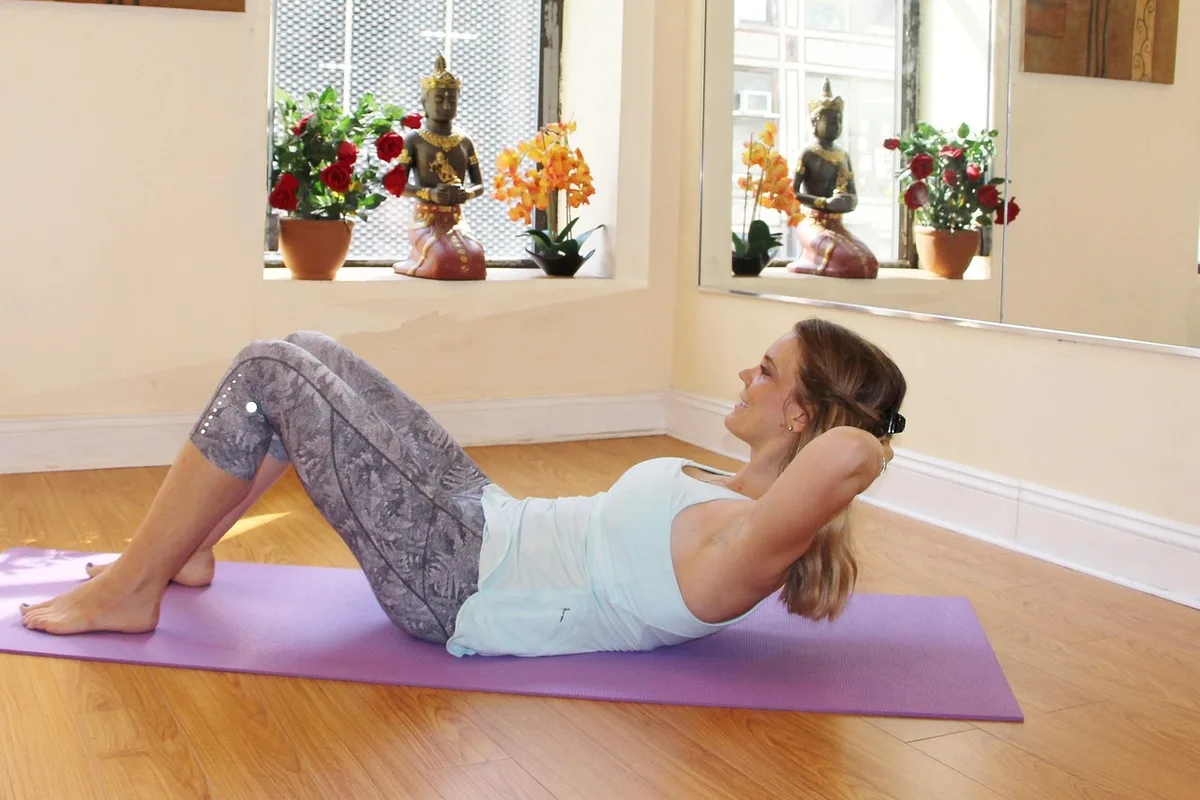
3. Figure-four stretch. Lie on your back with knees bent and feet on the floor. Cross one ankle over the opposite knee, pull both legs gently toward your chest, and hold. Switch sides. The figure-four stretch is programmed as 3 sets of 20 seconds on each side. Keep the pull gentle. You should feel it in the glutes, not in the knee.
Move four: the 90/90 hip switch
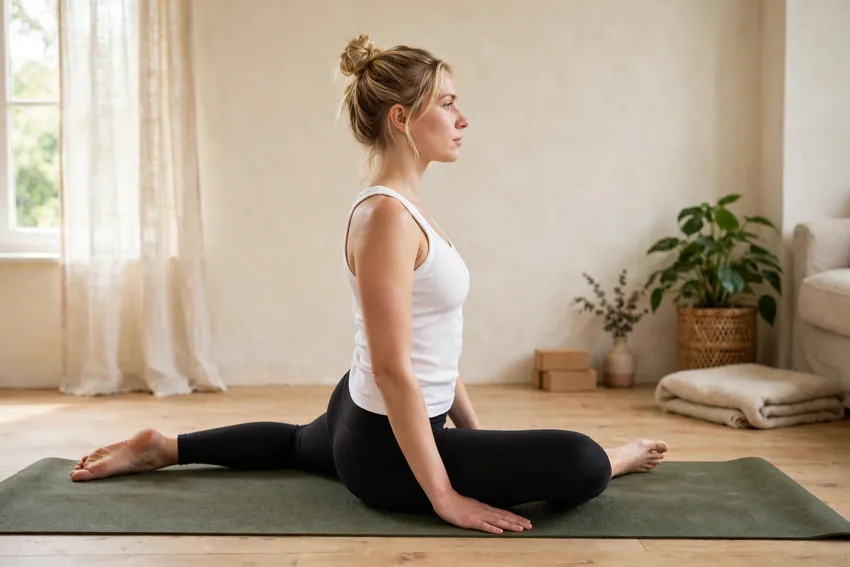
4. 90/90 hip switch. Sit on the floor with both knees bent at 90 degrees, one leg in front and one behind. Keep your feet planted and your chest tall, then rotate both knees to the other side like windshield wipers. Move slowly and stay within a pain-free range. Use your hands behind you for support if you tip over. The 90/90 hip switch is programmed as 2 sets of 8 on each side.
Move five: the couch stretch
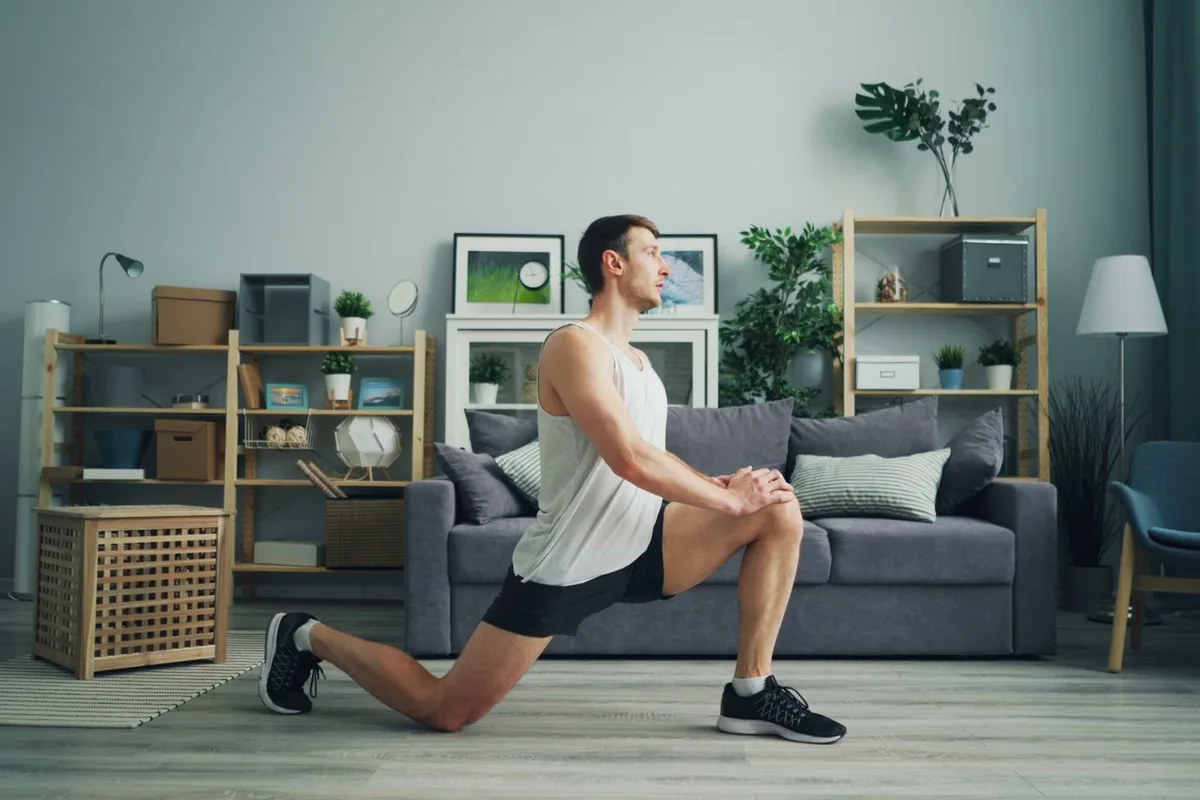
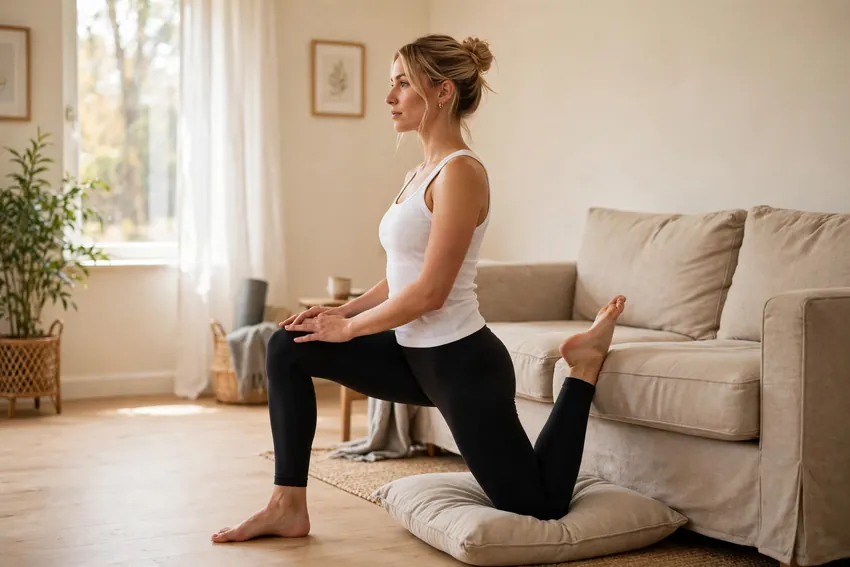
5. Couch stretch. Kneel facing away from a couch or wall, one shin up against it with the foot on the seat or wall. Step the other foot forward into a half-kneeling position, tuck your pelvis slightly, and squeeze the glute of the kneeling leg. Stay tall through the torso and breathe into the front of the thigh. Use cushions under the knee if it feels hard. The couch stretch is programmed as 2 sets of 40 seconds on each side.
Move six: the world's greatest stretch
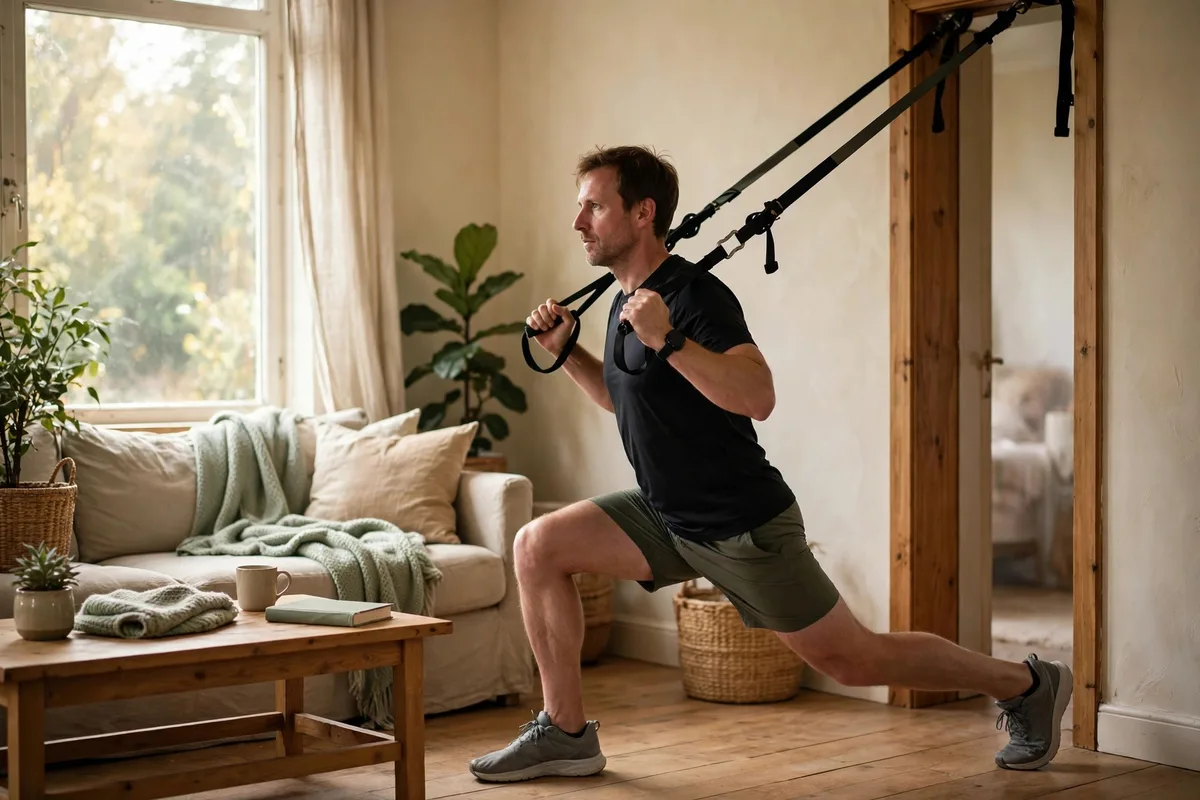
6. World's greatest stretch. Lunge forward, front foot flat, back knee hovering just off the ground, and hold. Place the same-side forearm down by the front foot, other hand on the ground, and hold. Then move both hands either side of the front foot, straighten the front leg, hold, and switch sides. The world's greatest stretch is programmed as 3 sets of 20 seconds on each side.
How to fit it into your week
Put this routine on the days between hard sessions, not after them. A rest day is when the routine does its work, because you are not asking tired muscles to stretch right after they have been loaded. Two rest days a week means two chances to run it. One is still useful if that is all your week allows. How many days a week to work out shows how rest days sit inside a normal training week.
If you train at home without equipment, this routine pairs well with that style of training, since every move here is bodyweight too. Home workout without equipment covers the hard-day side of the same setup. Keep the two kinds of day separate: hard days build strength, rest days keep you moving well enough to keep training.
Try it as a planned session
You do not have to remember the order or the holds. Take the quiz and Setline will arrange moves from the Mobility & Recovery library into a session that fits your gear, your style, and your minutes. The free player stays free. Pro adds the extras, with a 14-day free trial after you subscribe, at $6.99 a month, $39.99 a year, or $79.99 once for Lifetime. See the full breakdown on the pricing page before you decide.
Common questions
Should I stretch on a rest day, or just rest completely?
Gentle mobility work counts as rest here, because it is not loaded training. The moves in this routine use no weights and no hard effort. If you feel worn out, run the routine slowly and skip a set. If you feel fresh, still keep it gentle. Saving effort is the point of the day.
How long should a rest day mobility routine take?
About twenty minutes is enough for this set, including short rests. Shorter is fine on a busy day: run the spine moves and one hip move and stop there. Longer is not automatically better. Once each area has moved and you feel looser, the routine has done its job.
Do I need equipment for this routine?
No. Every move in this set is tagged bodyweight in the Setline catalog. The only furniture involved is a couch or wall for the couch stretch, and cushions under the knee are an option if that position feels hard. A mat helps on a hard floor but is not required.
What if one side feels much tighter than the other?
That is normal, and it is useful information. Spend the same time on both sides and let the tighter side set the range. Do not add extra sets to force the stiff side level. If a position causes sharp pain, stop that move. Persistent pain is worth getting checked, and this article is not medical advice.