Key takeaways
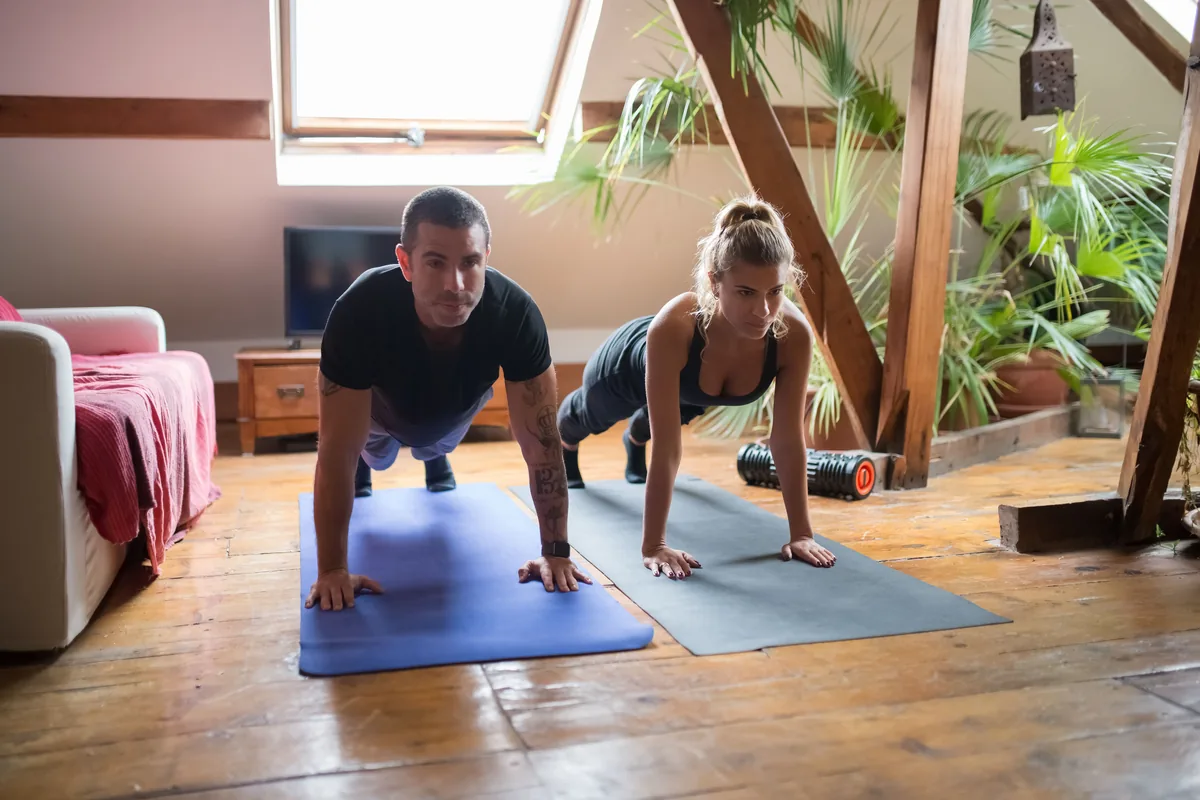
- The push-up is one straight line from head to heels: hands under shoulders, lower until your elbows sit near 90 degrees, then press the floor away.
- An easier variation is not a lesser exercise. Knee and incline push-ups keep the same pattern with less load, so you can practice the line while you get stronger.
- When a variation gives you 3 clean sets of 12, move one step harder: a slower tempo, a pause at the bottom, or the decline version.
How to do a push-up at home, step by step
The push-up is probably the first exercise most of us ever tried, and the one most of us were never actually taught. Learning how to do a push-up at home properly takes about five minutes, needs no equipment, and pays off for years, because the same movement shows up in almost every upper-body session. This guide walks through the exact form, easier versions to start with, and harder ones for when it gets easy.
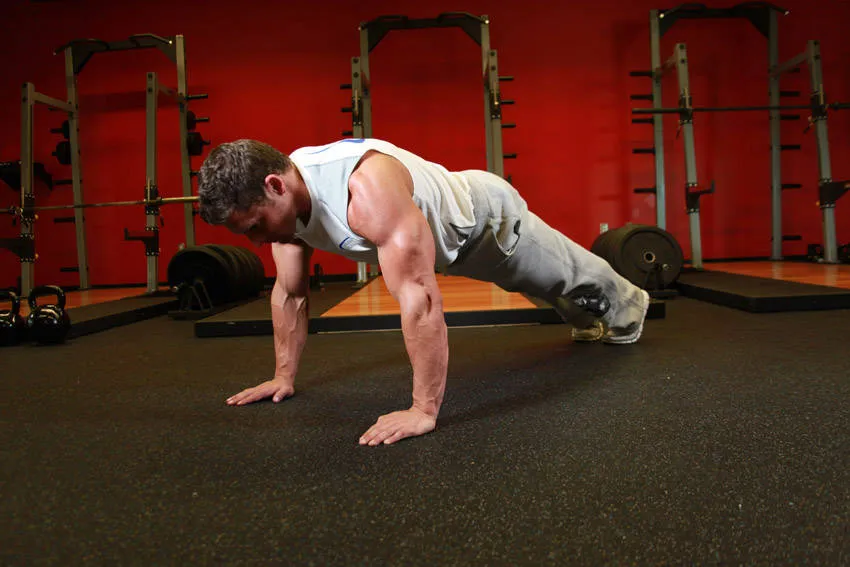
Set up with your hands under your shoulders and your body in one straight line from head to heels. That line is the whole exercise. Everything else is keeping it intact.
That is the full movement. In the push-up detail page you can see the start and finish positions side by side, which helps more than another paragraph of description.
A push-up works your chest, shoulders and arms, in that order. In Setline sessions it is usually programmed as 3 sets of 8–12 reps. If you cannot reach 8 good reps yet, that is not a problem to push through. It is a sign to use one of the versions below and build up.
- Hands under shoulders, body in one line. Fingers spread, weight even across the whole hand, not just the heel of the palm.
- Lower until your elbows sit near 90 degrees. Your chest travels most of the way to the floor. Keep the straight line as you go down; if your hips drop first, the set is already over.
- Press the floor away without sagging the hips. Push the ground down rather than thinking about lifting yourself up. Finish tall, ribs down, glutes tight.
Easier variations to start with
An easier variation is not a lesser exercise. It is the same pattern with less of your bodyweight on your hands, so you can practice the straight line while you get stronger.
Knee push-up. Set up exactly as above, then put your knees on the floor. The three cues from the knee push-up are simple: hands under shoulders with your knees down, lower your chest while keeping a straight line from head to knees, then press the floor away. When 3 sets of 12 feel controlled, move to the full version for your first set and drop back to knees when the line starts to bend.
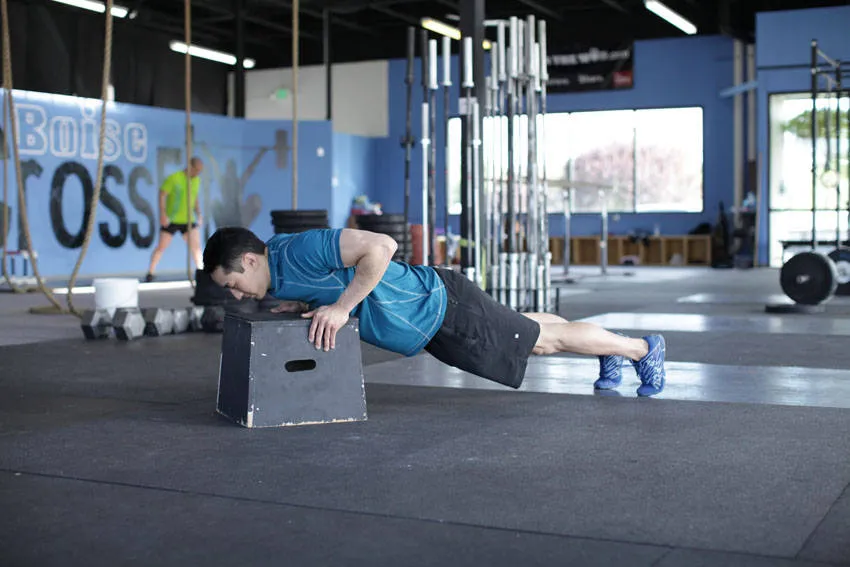
Incline push-up. Put your hands on a bench, a stair or a sturdy chair and keep your body in one line as you lower your chest to the edge. The incline push-up is the best starting point if knee push-ups bother your knees, and it is easy to make harder over time: just use a lower surface each week or two.
Harder variations when the standard push-up gets easy
Once 3 sets of 12 standard push-ups feel repeatable, you have options before you need any equipment. Slow the lowering phase down to three seconds. Pause for a breath at the bottom. Or try the decline push-up, with your feet on a chair or bench and your hands on the floor, lowering until your elbows bend near 90 degrees before pressing up. The decline version shifts more load onto your shoulders and upper chest, so treat your first set as a test, not a target.
If you would rather add weight than change the angle, a pair of dumbbells opens up presses and rows instead; our guide to a dumbbell workout at home covers how to pick a weight honestly.
Common mistakes that stall progress
Sagging hips. The most common one, and the easiest to film. If your lower back dips, your core has stopped doing its share. Shorten the set, or go back to an easier variation for the remaining reps.
Half reps. Lowering two inches and calling it a push-up feels productive and builds very little. The standard is elbows near 90 degrees, every rep. Fewer full reps beat more partial ones.
Elbows flaring wide. Some flare is fine, but elbows pointing straight out to the sides tends to feel rough on shoulders. Think of a gentle arrow shape instead of a T.
Rushing. Fast reps hide weak spots. A steady tempo, down on a count of two and up on one, tells you the truth about where you are.
Putting the push-up into a home session
On its own, the push-up is a move. Inside a session, it is the pressing piece of a bigger chest exercise library, and it pairs well with a plank for the core work that keeps your line honest. A simple home session might be push-ups, a squat variation, a plank, and one pulling or hinge movement, the same approach we use in our guide to a home workout without equipment. If your goal is fat loss, the bodyweight cut at home notes show how sessions and plates fit together.
If you would rather not assemble sessions yourself, the Setline quiz builds a session from your equipment, style and goal, and the push-up and its variations are already in the library it draws from. The catalog it draws from holds 302 exercises, so it can swap in a variation on days when your shoulders say no.
Your first week
Pick your variation today and do one honest set. Write the number down. Repeat the session twice more this week, same variation, and try to add a rep or two each time. That is the whole method, and it works whether the long-term goal is your first full push-up or a harder decline set. When you are ready for a plan that progresses this for you, take the quiz and let it build the week. If you want the full library and planning features, Setline Pro starts with a 14-day trial, then $6.99 a month.
Common questions
How many push-ups should a beginner do?
Start with the hardest variation you can do with a straight line, and aim for 3 sets. Reps will vary: maybe 4 knee push-ups, maybe 10 incline ones. When a variation gives you 3 clean sets of 12, move one step harder.
Which muscles do push-ups work?
Mainly your chest, with your shoulders and arms helping. That is why the push-up lives in the chest section of the catalog, even though your core works hard to hold the line.
Why do my hips sag when I get tired?
Because the plank part of the movement fatigues before the pressing part does. Finish the set there, rest, and let the next set start fresh. Adding short plank holds on other days helps faster than forcing sloppy reps.
Is it OK to do push-ups every day?
Small daily practice with easy reps is fine for most people, but hard sets need a rest day, just like any other training. Your chest and shoulders cannot tell the difference between a push-up and a bench press; they only know they worked.