Key takeaways
- The Chair Yoga library holds 32 exercises in three groups: seated bodyweight moves, standing moves with the chair nearby, and seated dumbbell moves.
- A first-week session is four moves — seated arm reach, weight shift, marching steps, and the optional seated dumbbell press — three days a week, with rest days between sessions.
- Start seated, add standing moves when your balance allows, and treat the dumbbell section as optional: the chair does the balance work, so you can focus on moving well.
Chair yoga at home for beginners: start with the chair, not the floor
If you want a way to move at home without getting up and down from the floor, chair yoga at home for beginners is a good place to start. The chair is not a prop for one gentle stretch. In the Setline catalog, the Chair Yoga style holds 32 exercises in three clear groups: seated bodyweight moves, standing moves done with the chair nearby for support, and seated dumbbell moves for days when you want more load. This article works through one move from each group, so you can see what the style really covers before you build a routine around it.
Pick a chair that does not wobble, roll, or tilt. A firm kitchen or dining chair is usually right. Your feet should rest flat on the floor, and your knees should sit roughly at hip height. Clear a small space around the chair so your arms can reach overhead and your knees can lift without hitting a table. That is the whole setup. You do not need a mat, and you do not need to clear a room.
The habit to build first is sitting tall. Feet flat, back long, shoulders down. Almost every seated move in this style starts from that same position, so if you learn it once, the rest of the session feels familiar. Work slowly, breathe normally, and stop a move if it pinches or jars. Mild effort is the target, not pain.
The seated section: reach, then settle
The seated section is where most beginners should start, because the chair does all the balance work for you. The Seated arm reach is a good first move. Sit tall with your feet flat, reach both arms overhead, then lower them back to your ribs and repeat. In a Setline session it is programmed as 3 sets of 10, and it works your shoulders, arms, and core.
See the Seated arm reach: full steps and demo for the full steps.
The standing-with-support section: weight shift and marching
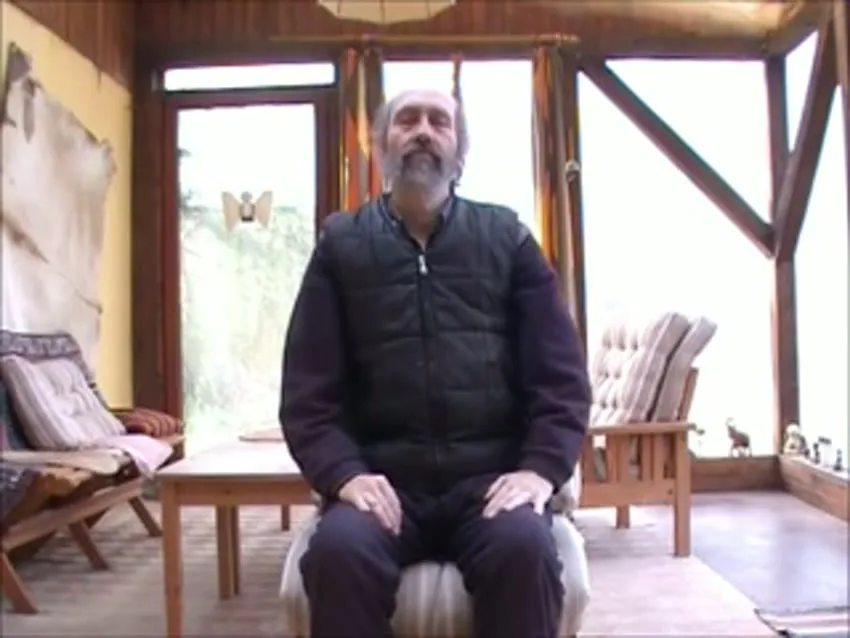
The second group is the one people miss when they picture chair yoga as sitting only. Standing moves with the chair nearby train your legs and balance while the chair stays within reach. The Weight shift is the calmest of them. Stand with soft knees and feet grounded, shift your weight to one leg and then the other, moving as if pushing through water. A Setline session programs it as 3 sets of 8 on each side, and it works your legs and core. The water image matters: it keeps the shift slow and smooth instead of a quick rock from side to side.
See the Weight shift: full steps and demo for the full steps.
Marching steps add a little more life to the same section. Stand tall with your eyes forward, lift one knee and then the other, slow and even, keeping your arms loose. It is programmed as 3 sets of 40 seconds and works your legs and core. Keep the chair close enough to touch if your balance wobbles, but try not to hang on to it. A light fingertip on the chair back is support; a full grip that pulls you sideways is a sign to slow down.
See the Marching steps: full steps and demo for the full steps.
The dumbbell section: the same chair, a little more load
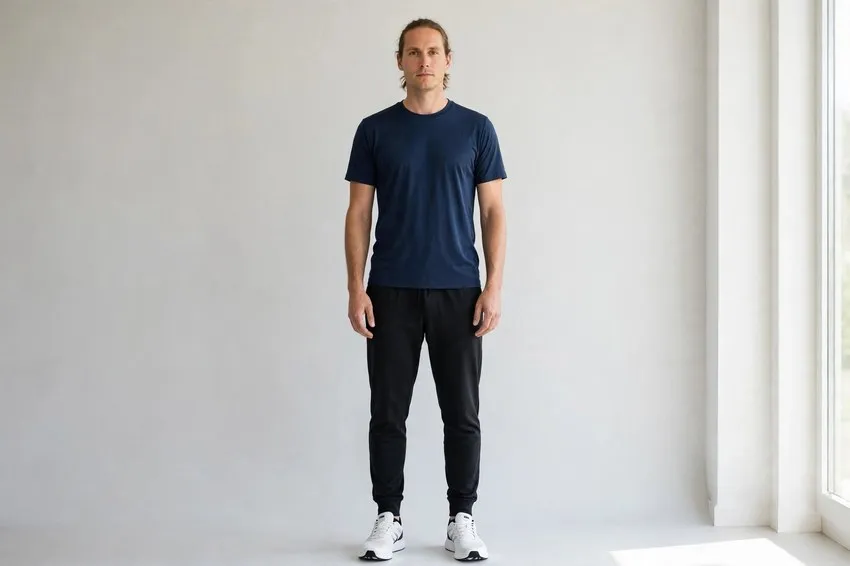
Here is the part that corrects the gentle-only picture. Part of the Chair Yoga hub uses dumbbells, seated, with the same chair and the same tall posture. The Seated dumbbell press is a clear example. Sit with back support and raise the dumbbells to shoulder height, palms facing forward. Press them up until they touch at the top, pause for a second, then lower slowly back to shoulder height. It is programmed as 3 sets of 10 to 12 and works your shoulders. Nothing about the setup changes except the load in your hands.
Treat the dumbbell section as optional, not as the goal. It belongs at the end of the session, after the bodyweight sections, and only on days when you have dumbbells and your shoulders feel fresh. Pick a weight you can press with control for the full set. If the last reps turn into a heave, the weight is too heavy for this session.
See the Seated dumbbell press: full steps and demo for the full steps.
A first-week routine you can repeat
You do not need a different routine every day. Repeat one session, and let familiarity do the work. For a no-equipment starting point, see Home workouts without equipment. Here is a first-week shape built only from the moves above, in the order this article taught them:
Do that session three days in the first week, with a rest day between sessions if you can. That rhythm matches the simple rule in How many days a week should you work out: a schedule you keep beats a bigger one you drop. If a day feels hard, cut the dumbbell section first and keep the seated section.
- Seated arm reach: 3 sets of 10
- Weight shift: 3 sets of 8 on each side
- Marching steps: 3 sets of 40 seconds
- Seated dumbbell press, only if you have dumbbells: 3 sets of 10 to 12
Start tonight, with one chair
You already have the equipment. Put a firm chair where your feet can rest flat, sit tall, and run through the four moves above once. If you want Setline to arrange them into a session built around your gear, your style, and your minutes, take the quiz. If you want saved sessions with your last-time reps in the player, Setline Pro offers a 14-day trial, then $6.99 a month, $39.99 a year, or $79.99 for lifetime access.
Browse the full Chair Yoga exercise library to see all 32 moves, with steps and a two-frame demo for each one.
Common questions
Do I need anything besides a chair?
No. The seated and standing sections use bodyweight only. Dumbbells are optional and only for the third section. A firm, non-rolling chair and enough room to reach overhead and lift your knees are the full equipment list.
Is chair yoga only gentle stretching?
No, and that is a common misunderstanding. The Chair Yoga style in the Setline catalog has 32 exercises across three groups: seated bodyweight moves, standing moves with chair support, and seated dumbbell moves. Stretching and slow movement are part of it, but so are pressing, marching, and balance work.
How often should a beginner do chair yoga?
Three days a week is a solid start, with rest days between sessions. Keep the same session for at least two weeks before changing it. If you want the reasoning behind that rhythm, the article on how many days a week to work out sets it out in plain terms.
What if I cannot stand for the marching section?
Stay seated and do the seated section plus the weight shift in a smaller range, or skip the standing section for that day. If balance or pain is a regular problem rather than a one-day issue, check with a clinician before building a routine around standing moves.