Key takeaways
- Six bodyweight moves, no bench, no band, no weight: bodyweight squat 3 sets of 10 to 15, reverse lunge 3 sets of 8 each side, glute bridge 3 sets of 10 to 15, single-leg bridge 3 sets of 8 each side, donkey kick 3 sets of 10 each side, bodyweight good morning 3 sets of 10 to 12.
- Run them in order — standing strength while fresh, floor work in the middle, the hinge last — twice a week on non-consecutive days, with rest between sets until your breathing settles.
- Form over range: keep the ribs down on both bridges, push the knees out on squats and lunges, and prefer a shorter, level rep to a big, sloppy one; stop any move that hurts a joint instead of stopping the session.
Glute exercises at home without equipment need a patch of floor and nothing else
These glute exercises at home without equipment need a patch of floor and nothing else. No bench, no band, no dumbbell. Six moves cover the job: two legs together, one leg at a time, floor work on the back, a kneeling isolation move, and a hinge. Every step below comes from the Setline exercise catalog, and every move is filed under the glutes exercise library.
A word on what is left out, because the line matters. The glutes and bodyweight combination page also lists a step-up knee raise, but that move is tagged with a bench, so it is not a no-equipment move and it is not in this set. The same page lists stretches and poses, and those are fine for a cool-down, but they are not strength work, so they do not count toward the six moves either.
Glute exercises at home without equipment: the six-move set
Work through the moves in order, with a short rest between sets until your breathing settles.
1. Bodyweight squat. Feet about shoulder width. Sit the hips back and down, then stand up by pressing the floor. The bodyweight squat works the legs, glutes, and core at 3 sets of 10 to 15. Keep the reps clean rather than fast.
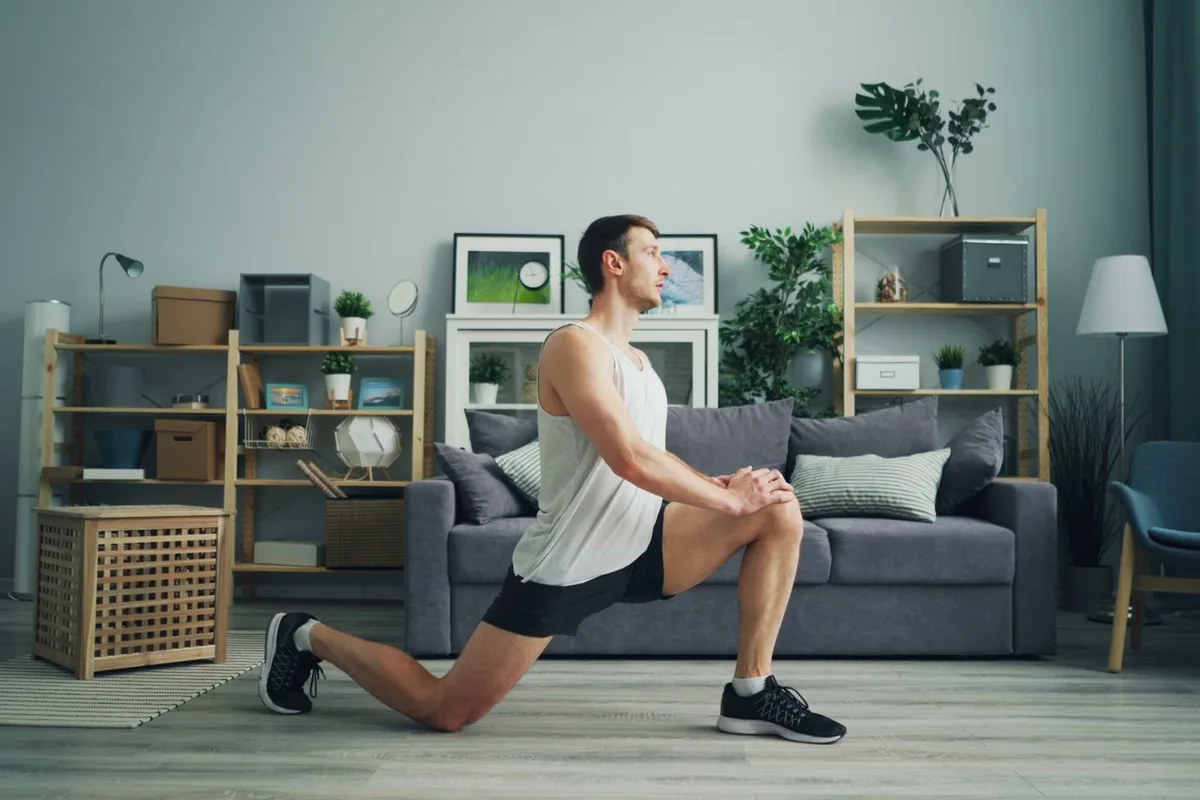
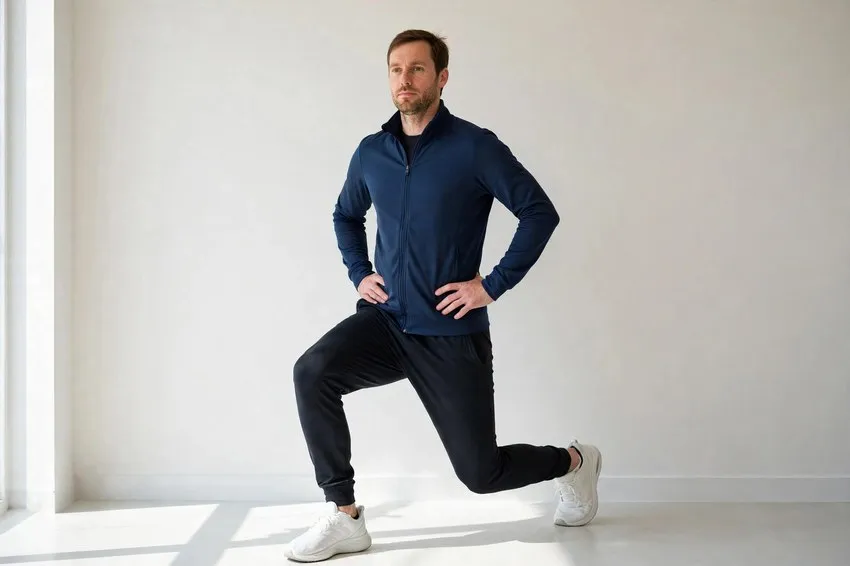
2. Reverse lunge. Step one foot back. Lower until both knees bend, then push through the front foot to stand. The reverse lunge runs 3 sets of 8 on each side, and the per-side count matters: eight on the left and eight on the right, not eight in total.
The floor work and the hinge: moves three to six
3. Glute bridge. Lie on your back, feet flat, knees bent. Press through the heels and lift the hips, squeeze at the top, then lower without collapsing. The glute bridge covers glutes, legs, and core at 3 sets of 10 to 15. If the lower back takes over, shorten the lift until the squeeze at the top is clearly in the glutes.
4. Single-leg bridge. Same start, one foot flat and the other leg long. Press the heel and lift the hips, lower without collapsing, then switch sides. The single-leg bridge runs 3 sets of 8 each side, and it is the direct next step from the glute bridge: halving the base makes the same pattern harder.
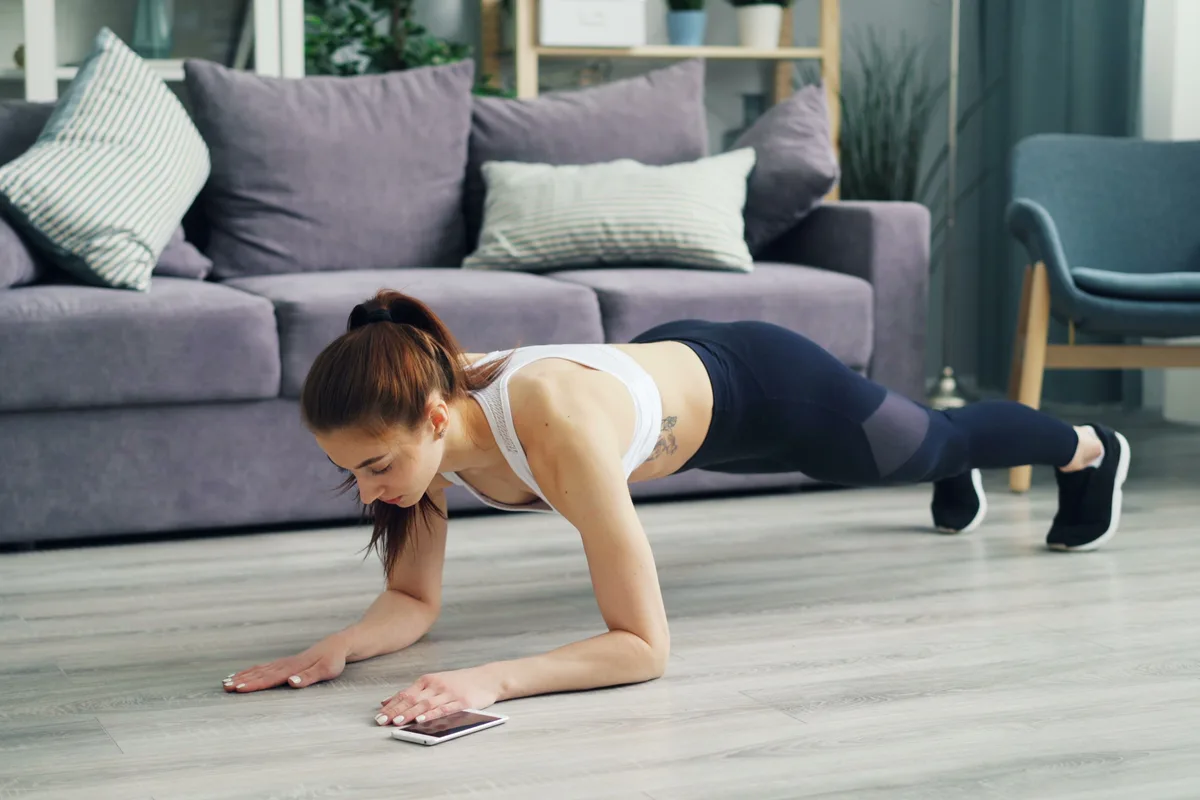
5. Donkey kick. Hands under shoulders, knees under hips. Kick one heel toward the ceiling, knee bent, then lower without dropping the hips, and switch. The donkey kick runs 3 sets of 10 each side. The hips must stay level through the whole set.
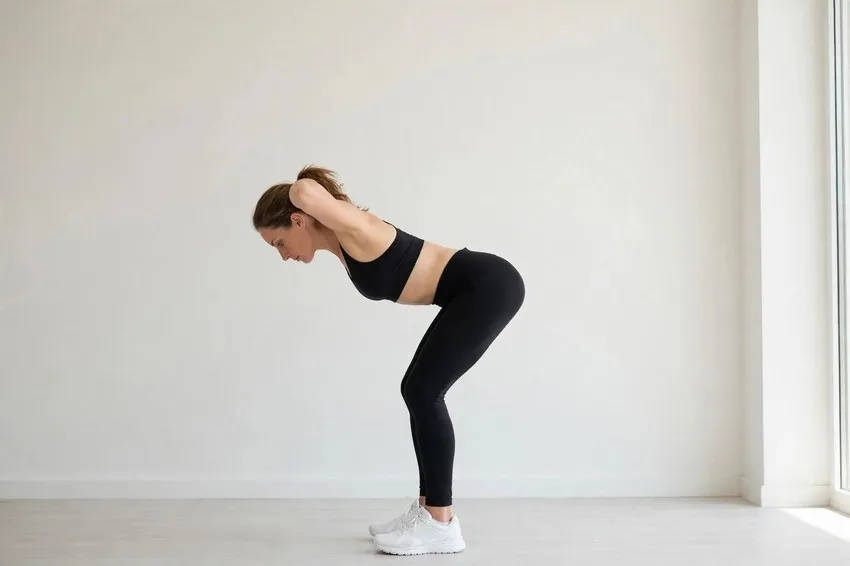
6. Bodyweight good morning. Hands behind the head, soft knees. Hinge until the torso is near flat, then stand by driving the hips forward. The bodyweight good morning works the back, glutes, and legs at 3 sets of 10 to 12, and it is the hinge pattern the other five moves do not train.
How to run the session, and how often
Run the moves in the order above: standing strength while you are fresh, floor work in the middle, the hinge last. Rest between sets until your breathing settles; there is no clock to beat. The whole set takes roughly half an hour at an unhurried pace. Twice a week suits most people, with at least a day between sessions. How many days a week to work out shows how two glute sessions sit inside a full week without crowding the other days.
Short on time? Squat, reverse lunge, and glute bridge alone still touch the three main patterns: two legs, one leg, and floor work. Do those three well rather than rushing all six badly.
Form cues that keep the work in the glutes
Three mistakes show up in almost every glute session. First, the lower back arches on floor work. On both bridges, the ribs should stay down and the lift should stop where the back starts to arch. Second, the knees cave in on squats and lunges. Push them gently out as you stand, and if they will not stay out, the set is done. Third, the range outruns control on the donkey kick and the good morning. A shorter, level rep trains the glutes; a big, sloppy rep trains everything except them. In all six moves, lower with the same care as the lift: lower without collapsing, as the bridge steps put it, rather than dropping into the bottom.
If a move hurts a joint, stop that move, not the session. Shorten the range next time, and get a joint that keeps complaining checked. None of this replaces medical advice for an injured knee, hip, or back.
Easier and harder swaps
Easier first. If the single-leg bridge wobbles too much, do the glute bridge for an extra set instead, and try the single-leg version again next week. If the good morning feels stiff, hinge to a smaller angle and hold the flat-back position for a breath before standing.
Harder, one change at a time. Slow the lowering phase on every rep to three seconds, which makes the same set counts feel like a different session. Or add reps inside the catalog ranges: take the squat and the glute bridge to the top of their 10 to 15 range before adding a fourth set. When single-leg bridges at the top of their range feel easy for weeks, that is the honest signal to add weight. The wider bodyweight exercise library and the glutes and bodyweight combination page show the full pool these six moves are drawn from.
Build the week around the six moves
A glute session this simple works best when it is not the whole plan. Take the Setline quiz and it builds sessions from the equipment you actually own, bodyweight included, so this workout lands on the right days instead of floating alone. Setline Pro opens the full library of 302 exercises, with a 14-day free trial, then $6.99 a month, $39.99 a year, or $79.99 for Lifetime.
Common questions
Do I really need no equipment for this?
Yes. All six moves are tagged bodyweight in the catalog, and none of them needs a bench, a band, or a weight. A mat helps on hard floors for the bridge and donkey kick work, but it is comfort, not a requirement. Anything that needs a bench, like the step-up knee raise on the combination page, was left out on purpose.
How long until I notice a difference?
Strength usually shows up before any visible change. Expect the moves to feel steadier and the last reps cleaner within a few weeks of twice-weekly sessions. Visible change depends on body composition, food, and time, and no honest article can put a date on it.
Can I do this every day?
Every day is a bad trade for the same muscles. The glutes recover like any other muscle group, so two sessions a week on non-consecutive days beats a daily grind that never recovers. Pair this set with a core session from 15-minute core workout at home, or with the upper-body days in home workout without equipment. A leg session from no-equipment leg workout at home shares three of these moves, so run it on a different day rather than stacking both sessions back to back.