Key takeaways
- Five bodyweight moves on a 45-second work, 15-second changeover timer for three rounds: 5 × 60 × 3 = 900 seconds, an exact fifteen minutes where the changeovers are the only rest.
- Four of the five moves train the trunk to resist movement - dead bug, plank, side plank, mountain climber - and the reverse crunch supplies the one flexion pattern; split the side-plank slot at about 22 seconds so both sides train in every round.
- Scale down by shortening the range before dropping a move, scale up one swap at a time (hollow hold, then flutter kick), and run the session two or three times a week on non-consecutive days rather than daily.
This 15 minute core workout at home runs on a 3-round timer
Here is a 15 minute core workout at home that needs nothing but floor space, and actually adds up to fifteen minutes. Five bodyweight moves, 45 seconds of work each, three rounds, fifteen seconds to change position between moves: 5 × 60 × 3 = 900 seconds. That is a real fifteen minutes, not a rounded-up promise. The dead bug teaches the back to stay flat while the limbs move. The plank and the side plank hold the trunk still against gravity, in two different planes. The reverse crunch works flexion from the pelvis instead of pulling on the neck. The mountain climber finishes with the heart rate up. Every move is a real entry in Setline's core exercise library, which holds 91 exercises with roughly 65 of them needing no equipment, and the steps below are the ones the catalog detail pages teach.
The timer is the program. Each move gets one 45-second work slot followed by a 15-second changeover, and rounds roll straight into each other. The changeovers are the only rest, which keeps the total at exactly 15:00. If you cannot hold good form through a slot, sit out its last ten seconds rather than holding a bad position, and pick the move back up in the next round. A shorter honest plank beats a longer sagging one. If three full rounds are too much this week, run two for a ten-minute session and add the third next week.
The five moves, in session order
Start with the control move, build to the static holds, then flex, then finish dynamic. Each link goes to the catalog detail page with the full demo.
1. Dead bug. On your back, arms up, knees over hips. Lower the opposite arm and leg without the back arching. Return and switch sides. The dead bug is the opening move because it is quiet: the back may not arch and the ribs may not flare while opposite limbs move. If the back loses contact with the floor, shorten the range until it does not.
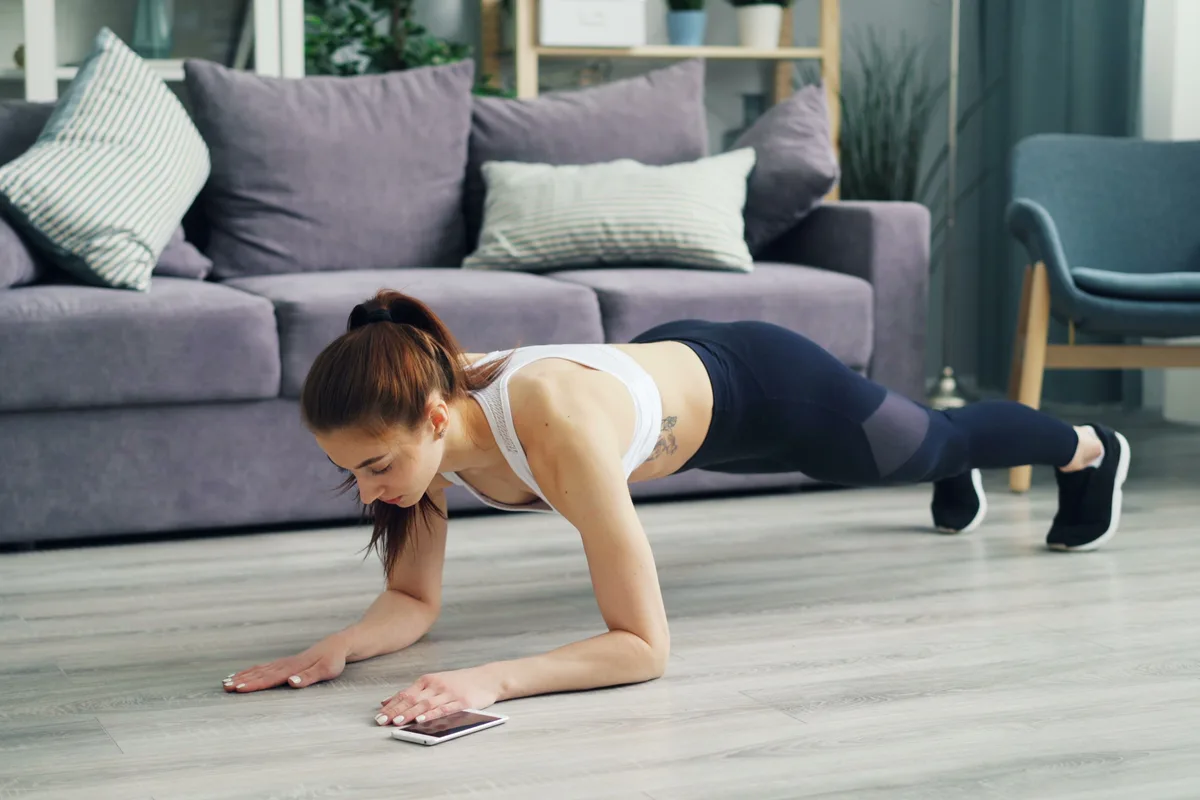
2. Plank. Forearms on the floor, elbows under shoulders. Squeeze glutes and keep a flat back. Breathe steady. Stop if the hips drop. The plank page says that last line plainly, and a shorter honest plank beats a longer sagging one.
3. Side plank. Forearm on the floor, elbow under the shoulder. Stack the feet and lift the hips. Hold. Switch sides after the time. The side plank covers the plane the front plank misses; the next section handles its two sides.
4. Reverse crunch. Lie on your back, arms at your sides, palms down. Lift your legs so your thighs are perpendicular to the floor, feet together. Roll the pelvis back to raise the hips off the floor, then lower with control. The reverse crunch moves the pelvis instead of curling the chest toward the knees, which keeps the neck out of the work.
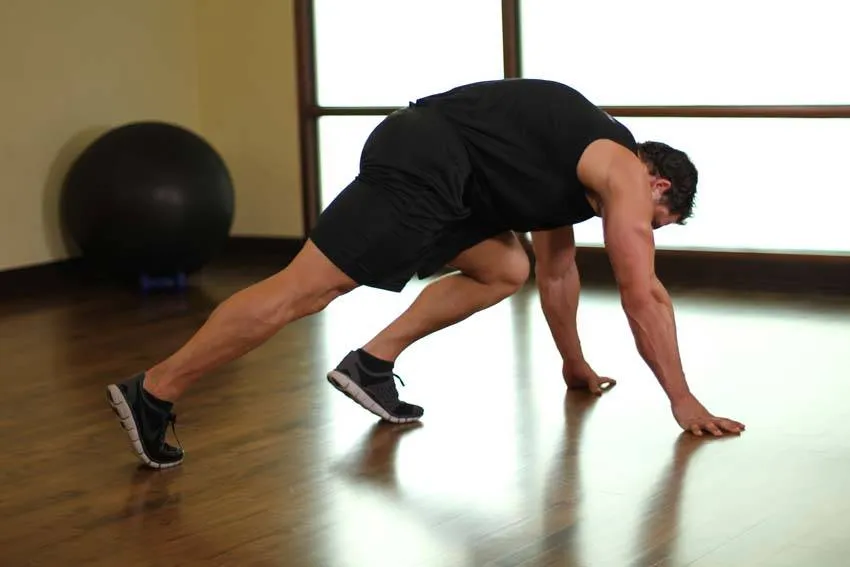
5. Mountain climber. High plank, hands under shoulders. Drive one knee toward the chest, then the other. Keep the hips low and the shoulders still. The mountain climber closes the session because it keeps the trunk braced while the legs move fast, and ends the fifteen minutes with the breathing up.
Side planks have two sides, and the timer only gives one slot
The catalog's side-plank steps end with "switch sides after the time," which works on a detail page but not inside a 45-second slot. Split the slot: work one side for about 22 seconds, switch, and finish on the other side. Both sides get trained in every round. Alternate which side starts each round so neither side always gets the fresh half.
Make the fifteen minutes easier or harder
Easier first. If the plank breaks before 45 seconds twice in a row, take the dead bug down to arms only: legs stay parked with knees over hips while one arm reaches back. If the reverse crunch cramps the hip flexors, shorten the range: roll the pelvis a small distance instead of chasing height. Shortening range keeps the pattern; collapsing the pattern ends the set.
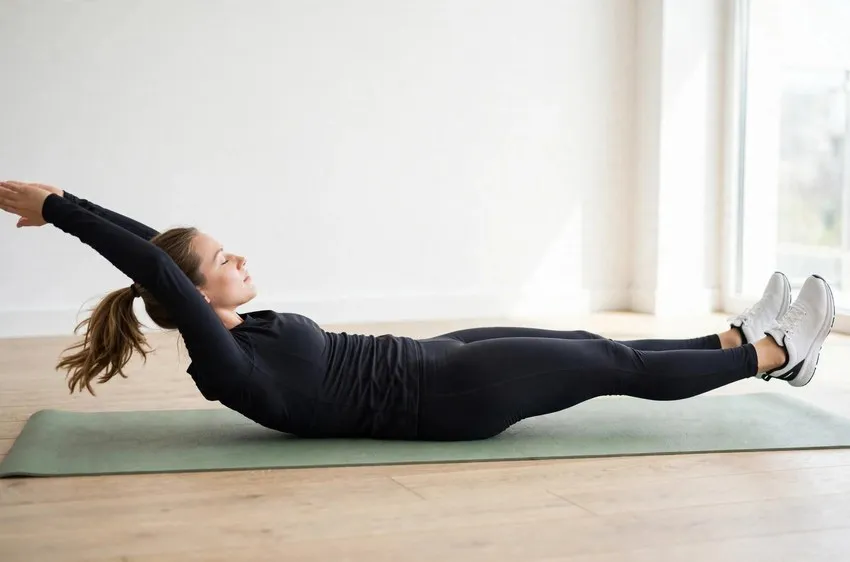
Harder, two swaps. Replace the second round's plank with the hollow hold: lie on your back, arms long overhead, lift the shoulders and legs a little off the floor, press the low back down, and breathe. It is the plank's harder sibling because the same anti-extension job now happens with the body folded at both ends.
The second swap: flutter kicks for the third round
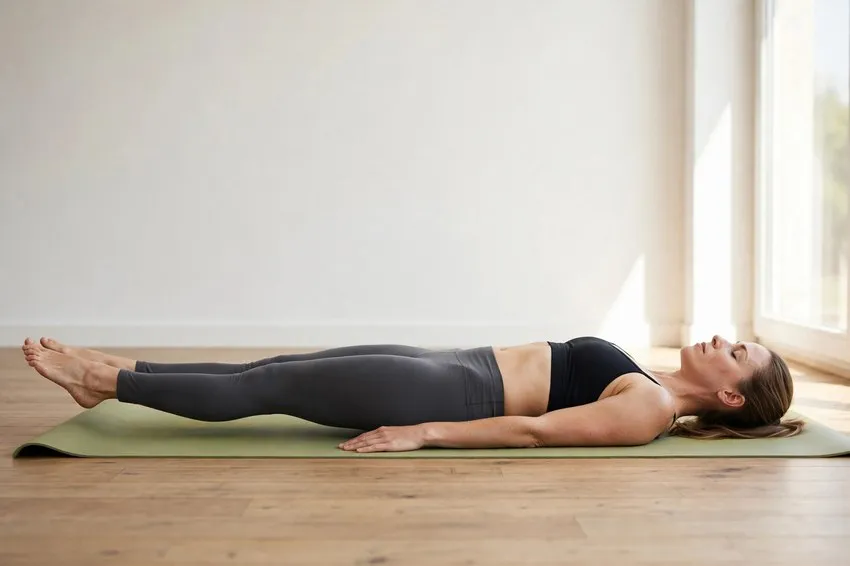
Replace the dead bug's third round with the flutter kick: lie on your back, heels a few inches off the floor, scissor the legs small and quick, press the low back down. Small and quick is the instruction to keep: big kicks turn it into a hip flexor swing. One swap at a time: two harder rounds in the same session usually cost form on the third.
Build the week around the fifteen minutes
A core session this short works best when it is not the whole plan. Take the Setline quiz and it builds sessions from the equipment you actually own, bodyweight included, so this workout lands on the right days instead of floating alone. Setline Pro opens the full library of 302 exercises, with a 14-day free trial, then $6.99 a month, $39.99 a year, or $79.99 for Lifetime.
Common questions
Do I need any equipment for this?
No. All five moves are bodyweight, and the session needs a floor, not a mat, though a mat helps on hard floors. The core-bodyweight combination page shows the wider pool this session is drawn from. If you add gear later, the moves do not change; only the loading does.
Can I do this every day?
The core recovers like any muscle, so every day is a bad trade. Two or three sessions a week on non-consecutive days is the sustainable rhythm, paired with full-body work on the other days. How many days a week to work out lays out how a week of training fits together without sessions crowding each other out.
Why are there no sit-ups?
The catalog has its own favorites, and this session picks from what the steps teach well. Four of the five moves train the trunk to resist movement, which is the job the core has most often in real life and in other lifts. The reverse crunch supplies the one flexion pattern. Nothing here claims sit-ups are bad; they are simply not the set this fifteen minutes is built from.
Is fifteen minutes enough for core?
For a dedicated core session, yes, when the timer is real and the rounds are honest. It is not a full workout, though. Pair it with a leg session from no-equipment leg workout at home, or with any of the gear-free days in home workout without equipment, and the week is covered: legs, core, and everything else on their own days.