Key takeaways
- One kettlebell trains every basic pattern: the seven moves below, taken in learning order, cover a squat, a hip hinge, a press, a row and a lunge, and each one teaches the skill the next needs.
- Choose the bell by the press test: the heaviest you can press overhead with one arm about five times without leaning sideways. Light for deadlifts is the correct trade for the first month.
- Build the set over your first three sessions rather than all on day one, and train three times a week with a rest day between; the swing and the Turkish get-up come later, once the slow hinge is automatic.
Why one kettlebell is enough to start
A kettlebell is the simplest gym there is: one handle, one weight, no moving parts. It is also the easiest tool to use badly: the photographed moves, the swing and the snatch, are the ones a beginner should learn last. This guide to kettlebell exercises for beginners takes the other order. Seven moves, all doable in a living room with one bell, each teaching the skill the next one needs.
One bell trains every basic pattern: a squat, a hip hinge, a press, a row and a lunge. Setline's kettlebell exercise library lists 22 kettlebell exercises; the seven below are the beginner cut of it, and the rest are harder skills to grow into with the same weight.
Pick a bell you can press overhead with one arm about five times without leaning sideways: light enough to learn the press and halo, heavy enough that deadlifts and goblet squats still feel like work. Between two sizes, take the lighter one; the first two weeks are for positions, not personal records.
Seven kettlebell exercises for beginners, in learning order
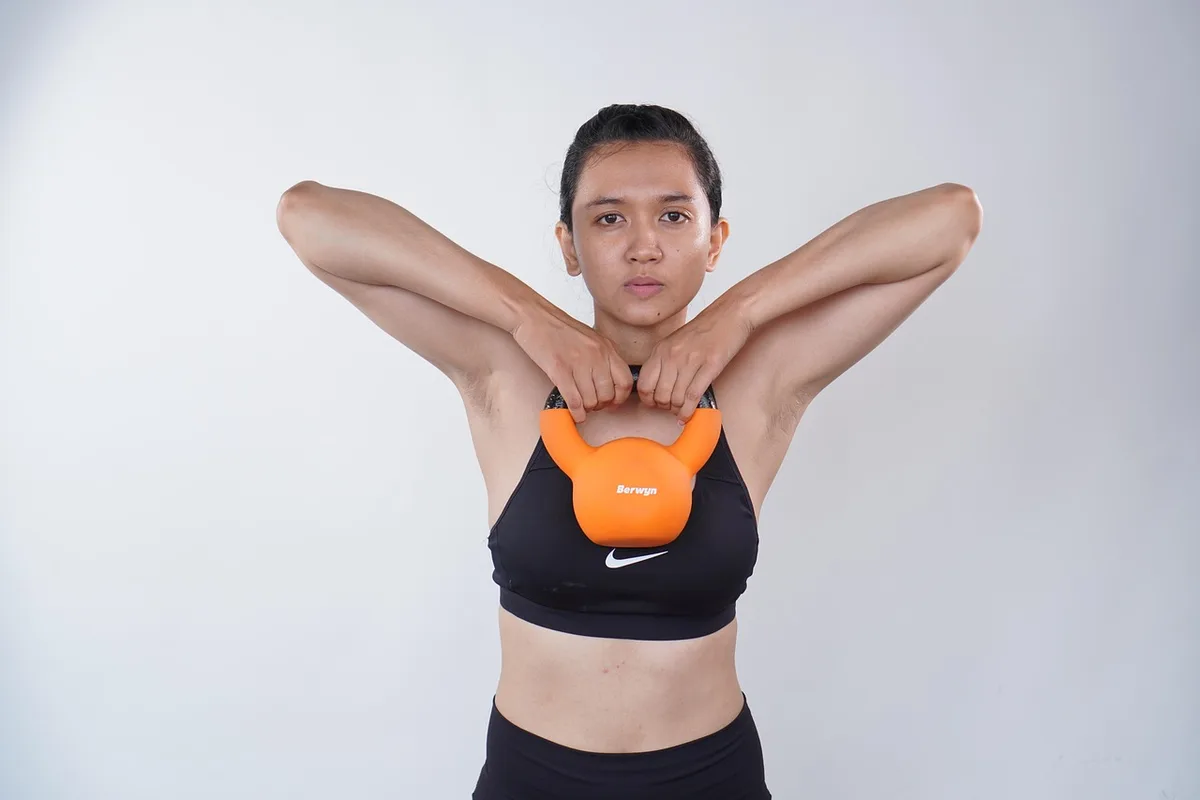
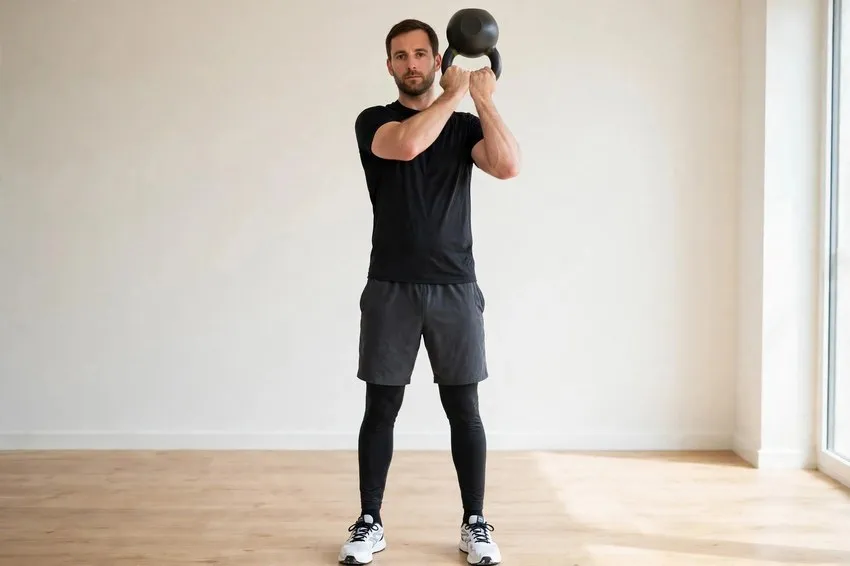
1. Kettlebell halo, the warm-up. Hold the bell at your chest, upside down, and circle it around your head, slow and close. Reverse the circle, trunk braced. The kettlebell halo works the shoulders and core at 3 sets of 6 each way. It wakes up the shoulders and teaches the braced trunk the other moves depend on.
The other six: hinge, squat, push, pull, press, lunge
2. Kettlebell deadlift, the hinge. Put the bell between your feet, hinge and grip it, then stand by pushing the floor, chest tall, and lower the bell along your legs. The kettlebell deadlift covers legs, glutes and back at 3 sets of 8 to 12. The hinge learned here is the engine of the swing later.
3. Goblet squat, the squat. Hold the kettlebell at your chest, sit between your heels with your elbows inside your knees, and stand up by pressing the floor. The goblet squat trains legs, glutes and core at 3 sets of 8 to 12. The bell at your chest is a counterweight, so most people squat deeper and more upright than empty-handed.
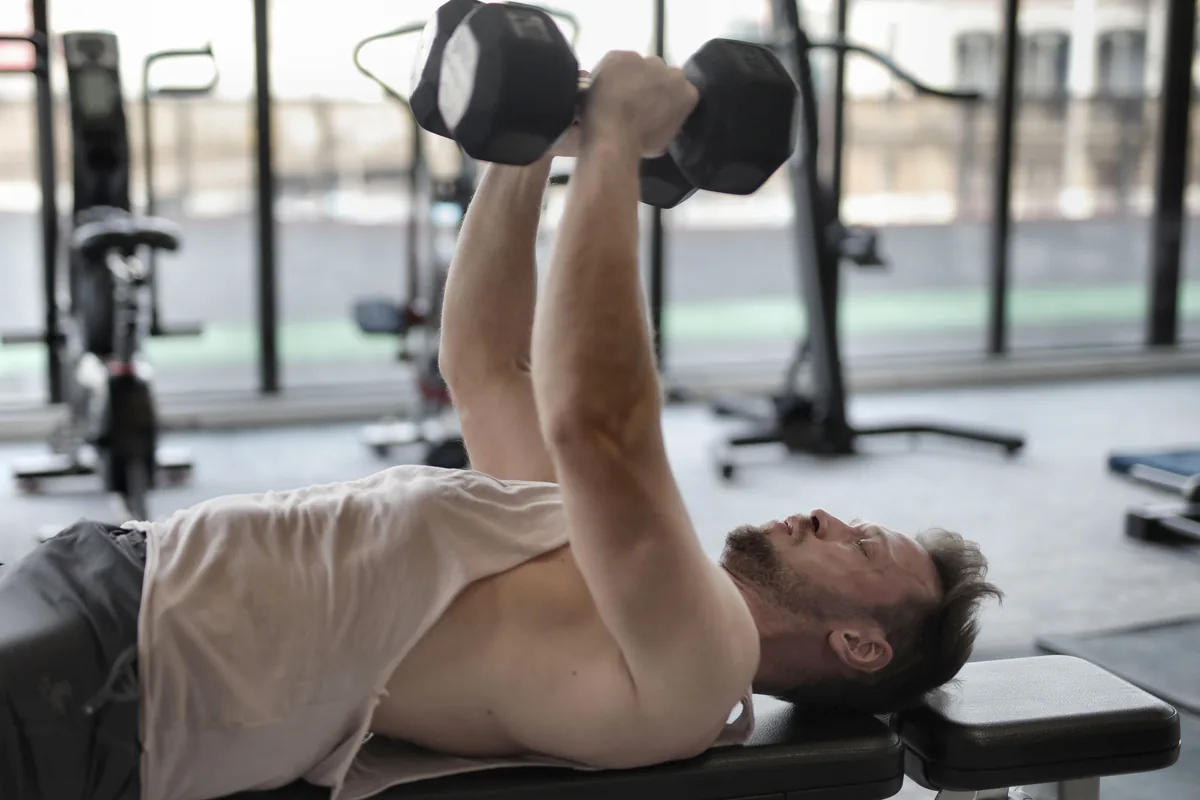
4. Kettlebell floor press, the push. Lie on the floor and lower the bells until your elbows kiss the floor, then press up without flaring your ribs. The kettlebell floor press works chest, shoulders and arms at 3 sets of 8 to 10. Setline's catalog programs it with a bell in each hand; with one bell, press one side at a time, free hand resting on your ribs as a reminder. The floor caps the range and keeps new shoulders honest.
5. Kettlebell row, the pull. Hinge with a flat back, one hand on a bench or on your knee, pull the kettlebell to your hip and lower it under control. The kettlebell row covers back and arms at 3 sets of 8 to 10. It reuses the deadlift hinge.
6. Kettlebell press, the overhead test. Rack the kettlebell at your shoulder, press it overhead until your arm is long, then lower it back to the rack with your trunk braced. The kettlebell press trains shoulders, arms and core at 3 sets of 6 to 8. Starting every rep from the rack is the beginner-friendly part: the bell begins in position each time.
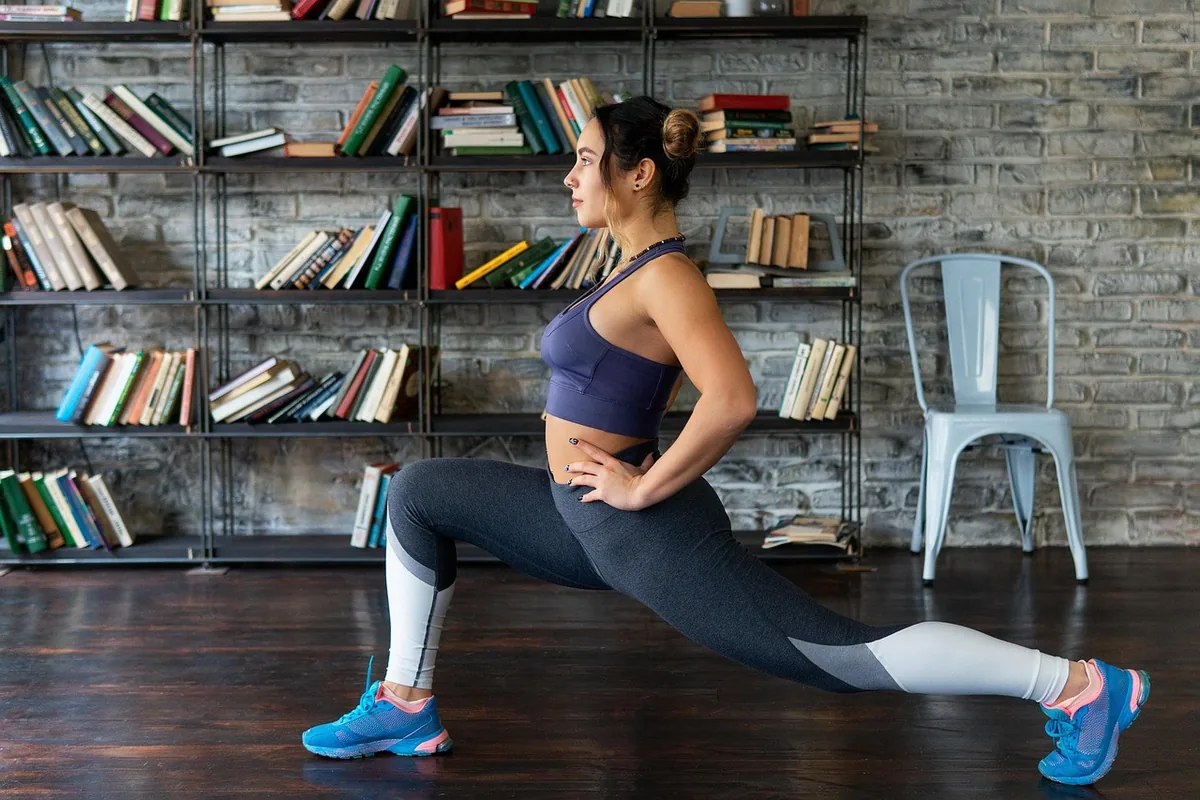
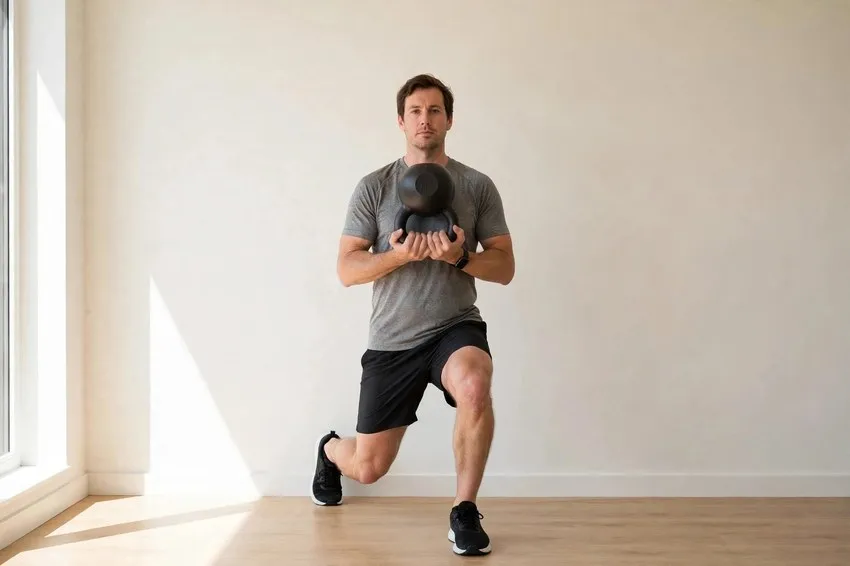
7. Kettlebell reverse lunge, the single leg. Hold the kettlebell at your chest or down by your side, step one foot back and lower both knees, then push through the front foot to stand. The kettlebell reverse lunge works legs and glutes at 3 sets of 8 on each side. Stepping back is steadier than stepping forward, and the bell at your chest balances easier than at your side.
How to run your first two weeks
Do not try all seven on day one. Session one: halo, deadlift, goblet squat. Session two adds the floor press and the row. Session three adds the press and the reverse lunge, and you have the full set. Three sessions a week, with a rest day between, is plenty; how many days a week to work out shows how that rhythm fits a normal week.
Keep the session order above: warm-up first, hinge and squat while fresh, press and pull in the middle, lunge last because it needs the least load to feel hard. Rest until your breathing settles; nothing here is against a clock.
Kettlebell days pair well with dumbbell workout at home and the no-gear days in home workout without equipment, as long as each pattern appears twice a week somewhere.
What to learn next, and what to skip for now
The kettlebell swing is the move most people buy a bell for: hike it back, snap the hips forward, let it float to chest height without squatting it. It is a fine goal and a poor starting point, because it is the deadlift hinge done fast. Give it two weeks of deadlifts first; when the hinge is automatic at slow speed, start the swing light and short, 3 sets of 12 to 15, and stop when the float turns into a lift.
The Turkish get-up is the other famous one: from the floor, press a bell up, roll to seated, then to one knee and stand, eyes on the bell throughout. It teaches control like nothing else here, but has more positions than the other seven combined. Treat it as a month-two project, rehearsed first with no weight.
Skip snatches, thrusters, windmills and overhead squats for now: they are progressions, and none teaches a beginner anything the seven above do not teach more safely.
Start with the hinge, this week
Put the bell between your feet tonight and do the halo and the deadlift, three easy sets each. That is a complete first session, and the hinge you practise there carries every kettlebell move you will learn. Want the full week built around the gear you own? Take the Setline quiz and it assembles sessions from your equipment, kettlebell included. Setline Pro opens the full library of 302 exercises and starts with a 14-day free trial, then $6.99 a month, $39.99 a year, or $79.99 for Lifetime.
Common questions
What weight kettlebell should a beginner buy?
Use the press test: the heaviest bell you can press overhead with one arm about five times without leaning away from it. It will feel light for deadlifts and right for everything else, the correct trade for month one. A heavier second bell is a month-three decision.
Will one kettlebell damage my floor?
It can, if you set it down carelessly or drop a press. Put it down as you picked it up, hinged and under control, and train on a rug or mat, not bare wood. Nothing in the seven is dropped or thrown.
When should I move on from these seven?
When the top of each set range feels steady two sessions running: 12 clean deadlifts, 8 controlled presses, lunges without a wobble. Then add the swing, then the get-up, one new skill at a time. Kettlebell progression is mostly about earning the next move, not adding weight weekly.