Key takeaways
- Eight moves cover the four patterns a leg session needs: both legs together, one leg at a time, the glutes and the back of the legs on the floor, and the calves, the part most routines forget.
- Run the moves in order, standing strength first and calves last, twice a week with at least a day between leg sessions; short on time, squat, reverse lunge, glute bridge and wall sit alone still touch all four patterns.
- Progress without load comes from shifting work onto one leg, slowing the lowering phase and adding reps inside the catalog ranges; when the top of the range feels easy for weeks, that is the honest signal to add weight.
What "cover everything" actually means
Leg day is the session home training usually skips: legs get a few squats and a promise to do more next week. This no equipment leg workout at home fixes that with eight bodyweight moves: two-leg strength first, then single-leg work, glutes on the floor, a short power option and calves at the end. You need a patch of floor and one wall. Nothing else.
A leg session covers everything when it trains four patterns, not when it piles up squat variations. First, both legs together: squats and holds. Second, one leg at a time, because daily life is mostly single-leg: stepping, climbing, getting up. Third, the back of the legs and the glutes, which floor work trains well. Fourth, the calves, the part most routines forget.
The eight moves below hit all four. They come from Setline's bodyweight exercise library, which runs to 162 no-equipment exercises; the legs hub alone lists 133. This session is the short, balanced cut of that library.
The no-equipment leg workout at home, move by move
1. Bodyweight squat. Feet about shoulder width. Sit the hips back and down, then stand up by pressing the floor. The bodyweight squat works the legs, glutes and core at 3 sets of 10 to 15. Every other move here builds on this pattern, so keep the reps clean rather than fast.
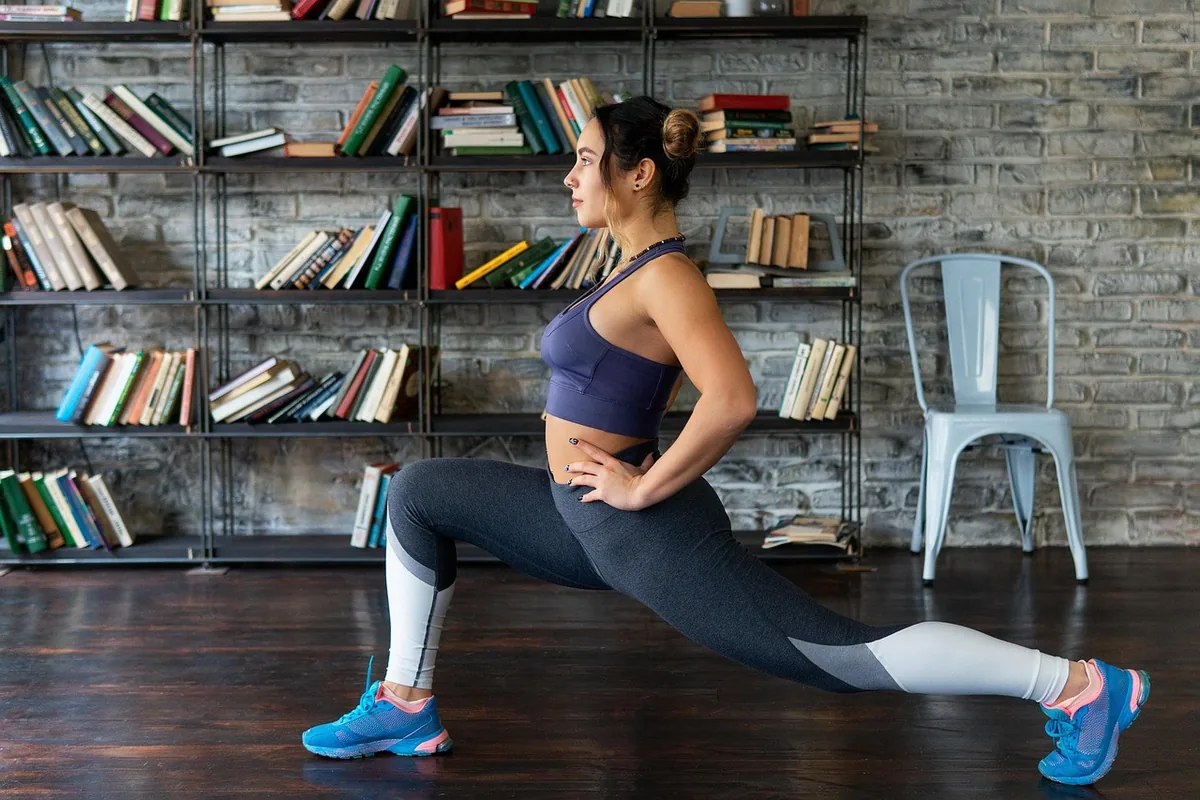
2. Reverse lunge. Step one foot back. Lower until both knees bend, then push through the front foot to stand. The reverse lunge runs 3 sets of 8 on each side, and single-leg work is where balance and strength gaps show up. Stepping back, rather than forward, keeps the front knee calmer while you learn it.
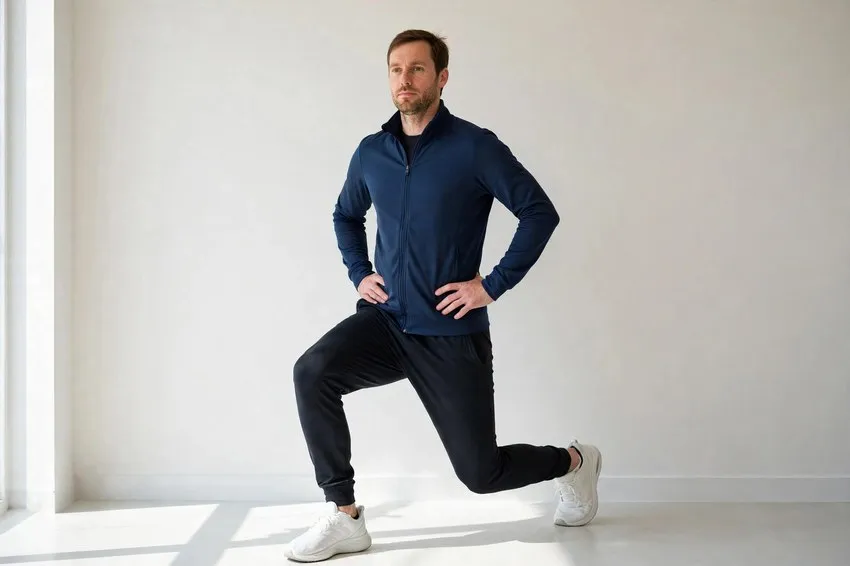
Split squat: the steadiest single-leg move here
3. Split squat. Stagger the feet and keep the torso tall. Lower until both knees bend, then press through the front foot to stand, without stepping anywhere. The split squat is also 3 sets of 8 each side. Because your feet stay put, it is the steadiest single-leg move here, and for many people the hardest.
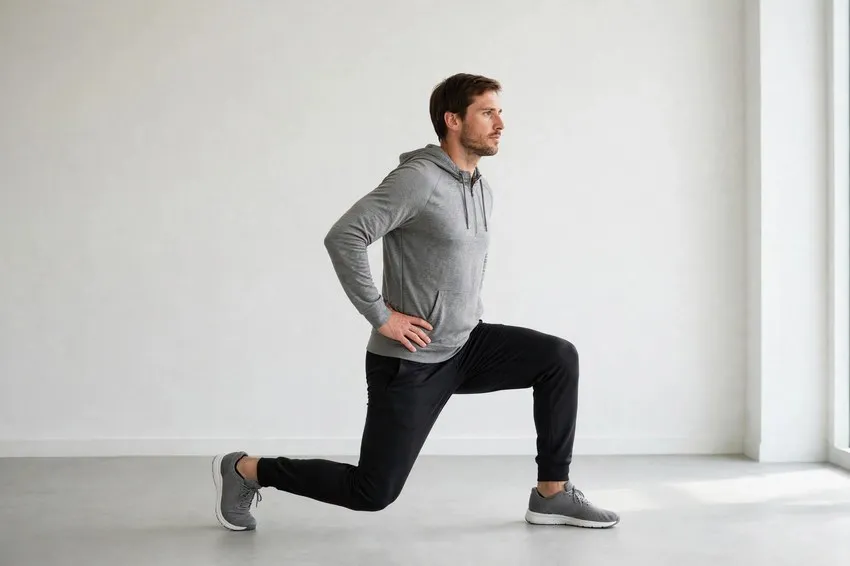
Wall sit, floor work and the power option
4. Wall sit. Back flat on a wall, sit until the thighs are near level, knees over the ankles. Hold and press the floor. The wall sit is 3 sets of 30 seconds. Nothing moves, and the legs work the whole time.
5. Glute bridge. Lie on your back, feet flat, knees bent. Press through the heels and lift the hips, squeeze at the top, then lower without collapsing. The glute bridge covers glutes, legs and core at 3 sets of 10 to 15, and gives the back of the legs its share.
6. Single-leg bridge. Same start, one foot flat and the other leg long. Press the heel and lift the hips, lower without collapsing, then switch sides. The single-leg bridge runs 3 sets of 8 each side. Halving the base doubles the wobble, so go slower than feels necessary.
7. Jump squat. Sit into a squat, then jump and land soft, and sit again. The jump squat is 3 sets of 8 to 10, and its own instructions carry the escape hatch: skip the jump and stand tall if you need to.
Last: the calf raise
8. Calf raise. Stand tall, with a light hold on a wall if you want it. Rise onto the balls of the feet, then lower slowly until the heels kiss the floor. The calf raise finishes at 3 sets of 12 to 15: up, then slow down.
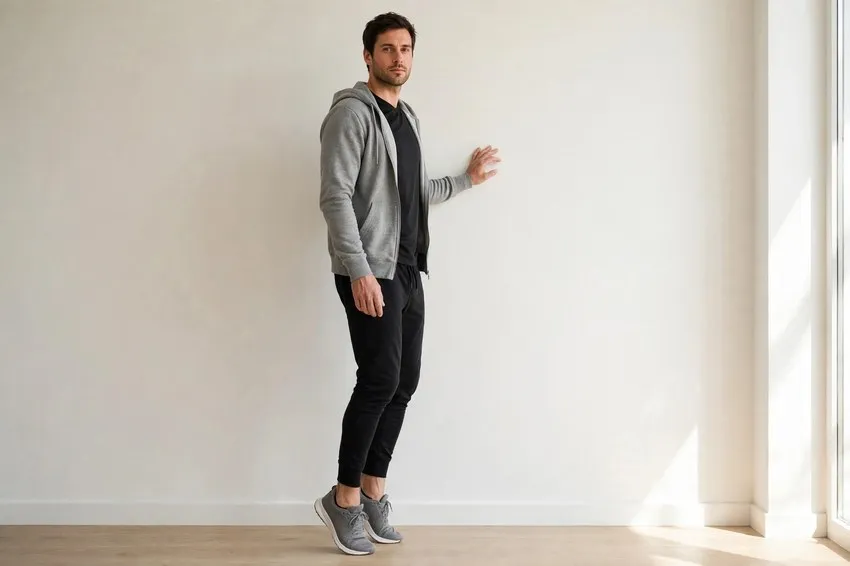
How to run the session
Run the moves in order: standing strength first while you are fresh, floor work in the middle, calves last. Rest between sets until your breathing settles; there is no clock to beat. Twice a week suits most people, with at least a day between leg sessions. Our guide to how many days a week to work out shows how leg days sit inside a full week, and home workout without equipment covers the upper-body days in between. Short on time? Squat, reverse lunge, glute bridge and wall sit alone still touch all four patterns.
Mistakes that quietly empty a leg session
Knees caving in. On squats, lunges and split squats, tired knees drift toward each other. Push them out gently as you stand. If they will not stay out, the set is done.
Rushing the bridges. Both bridge steps end with "lower without collapsing." The way down is half the move. If the hips drop, you are doing half a session.
Sitting too high on the wall sit. Thighs near level is the position. Six inches higher feels kinder and trains much less; take shorter sets instead.
Bouncing the calf raises. The steps say lower slowly until the heels kiss the floor. A bounce skips the bottom half of every rep, the half your calves notice most.
Put your next leg day on the calendar
Pick a day this week and run all eight moves once, easy, just to learn the order. Write down where each move felt hard; that note is your starting point next session. Want the week assembled for you instead? Take the Setline quiz and it builds sessions from the equipment you actually have, including none. Setline Pro gives you the full library of 302 exercises and starts with a 14-day free trial, then $6.99 a month, $39.99 a year, or $79.99 for Lifetime.
Common questions
Can bodyweight training really build stronger legs?
Up to a point, and the point is further away than people think. You progress by shifting work onto one leg (split squats, single-leg bridges), slowing the lowering phase, and adding reps inside the catalog ranges. What bodyweight cannot do is add load forever; when split squats at the top of their range feel easy for weeks, that is the honest signal to add weight. Our bodyweight cut at home guide builds a full week on the same idea.
How sore should I be the next day?
Some stiffness after the first session is normal, especially from the lunges, and should mostly fade by the third or fourth session. Sharp pain is different from effort: stop the move, shorten the range next time, and if a joint keeps complaining, get it checked.
What if lunges bother my knees?
Start with the reverse lunge rather than stepping forward, keep the step shorter, and do not lower as deep. The split squat and wall sit train the same front-of-thigh muscles with feet planted, so you can swap lunges out while you build up. None of this replaces medical advice for an injured knee.
Do I need a mat or special floor?
No. Any flat floor works for the standing moves, and a rug or carpet is enough padding for the bridges. The wall sit needs one clear stretch of wall, which is the closest this session gets to equipment.